Last updated November 21, 2026
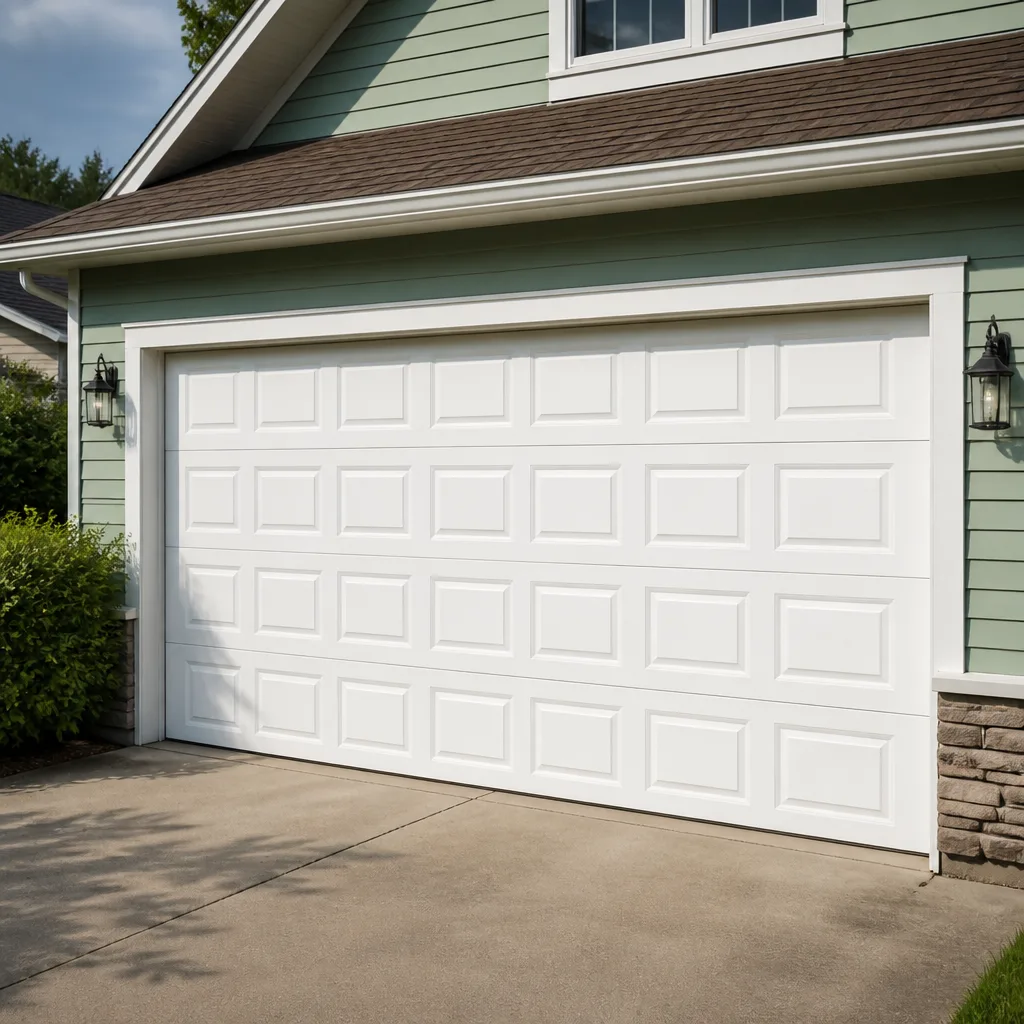 Raised-panel steel
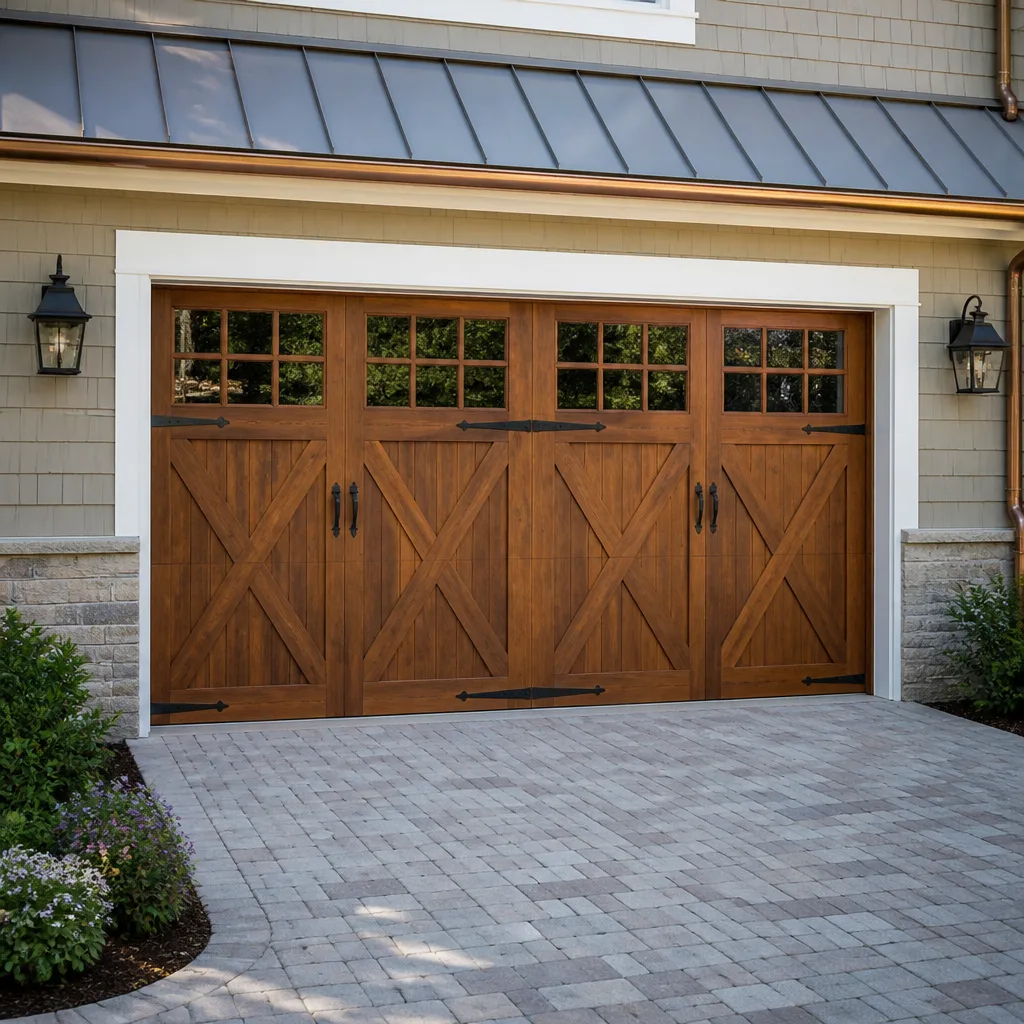 Carriage house
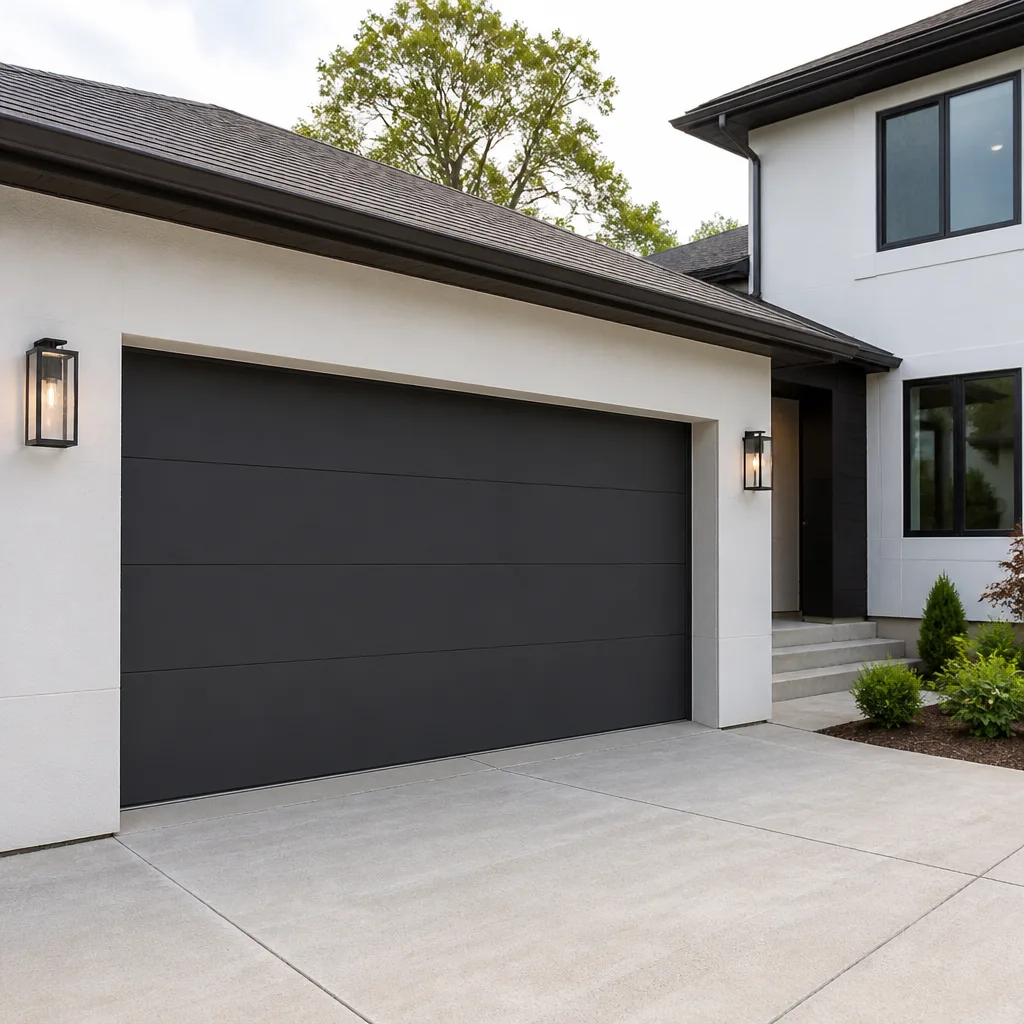 Modern flush
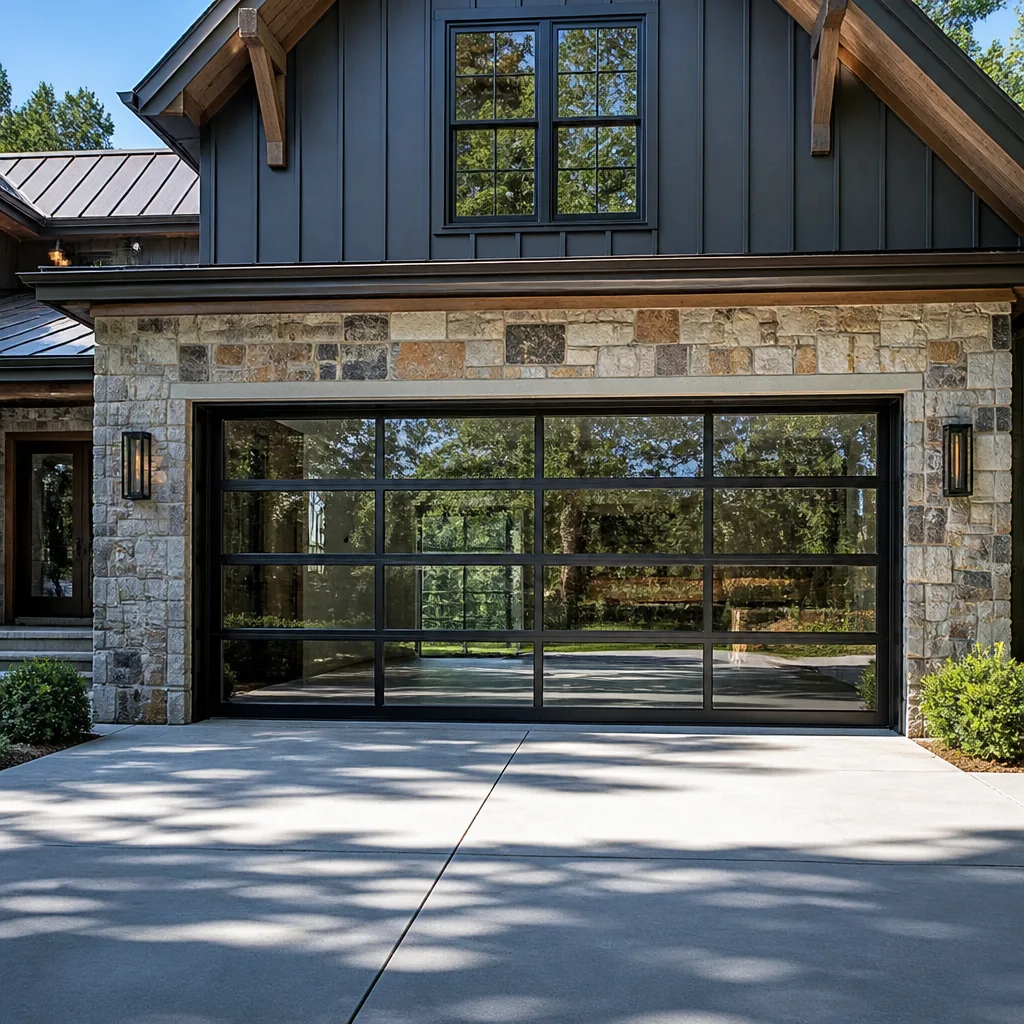 Full-view glass
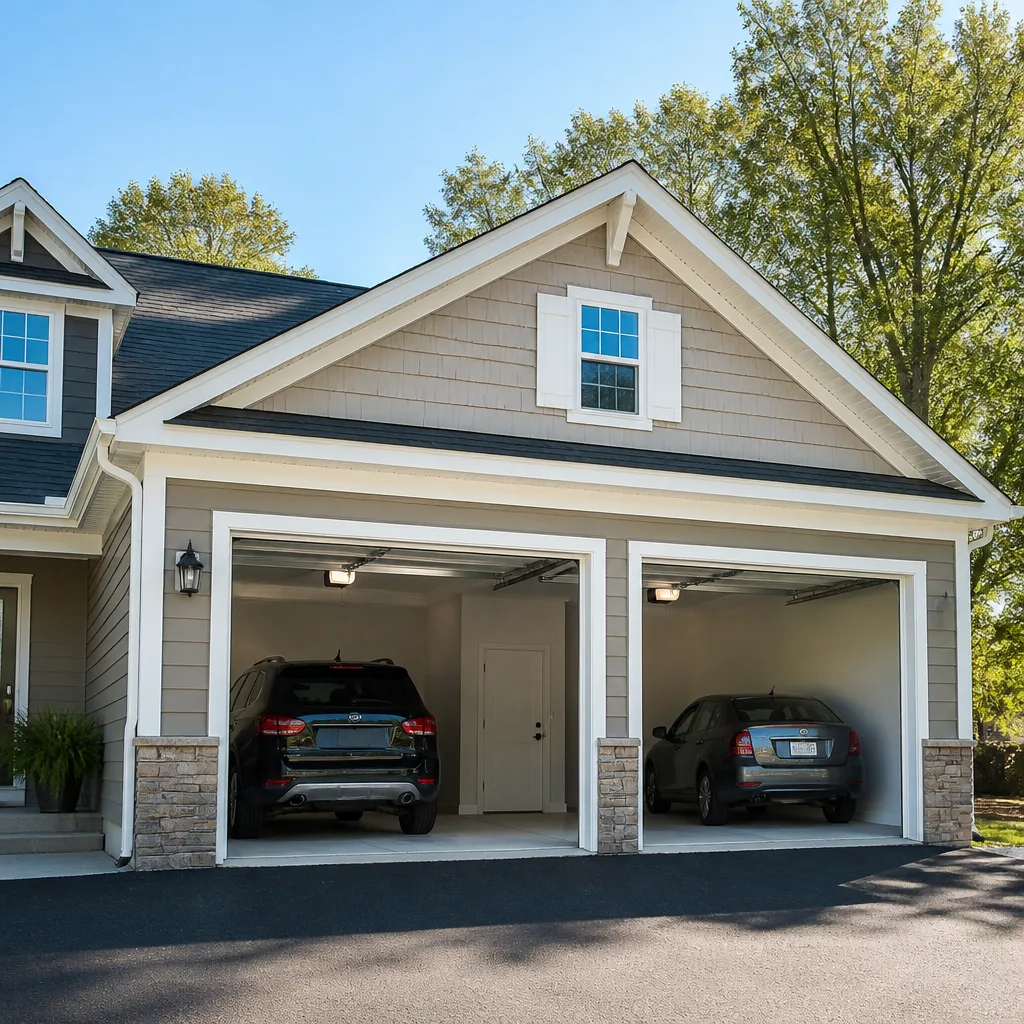 LiftMaster openers
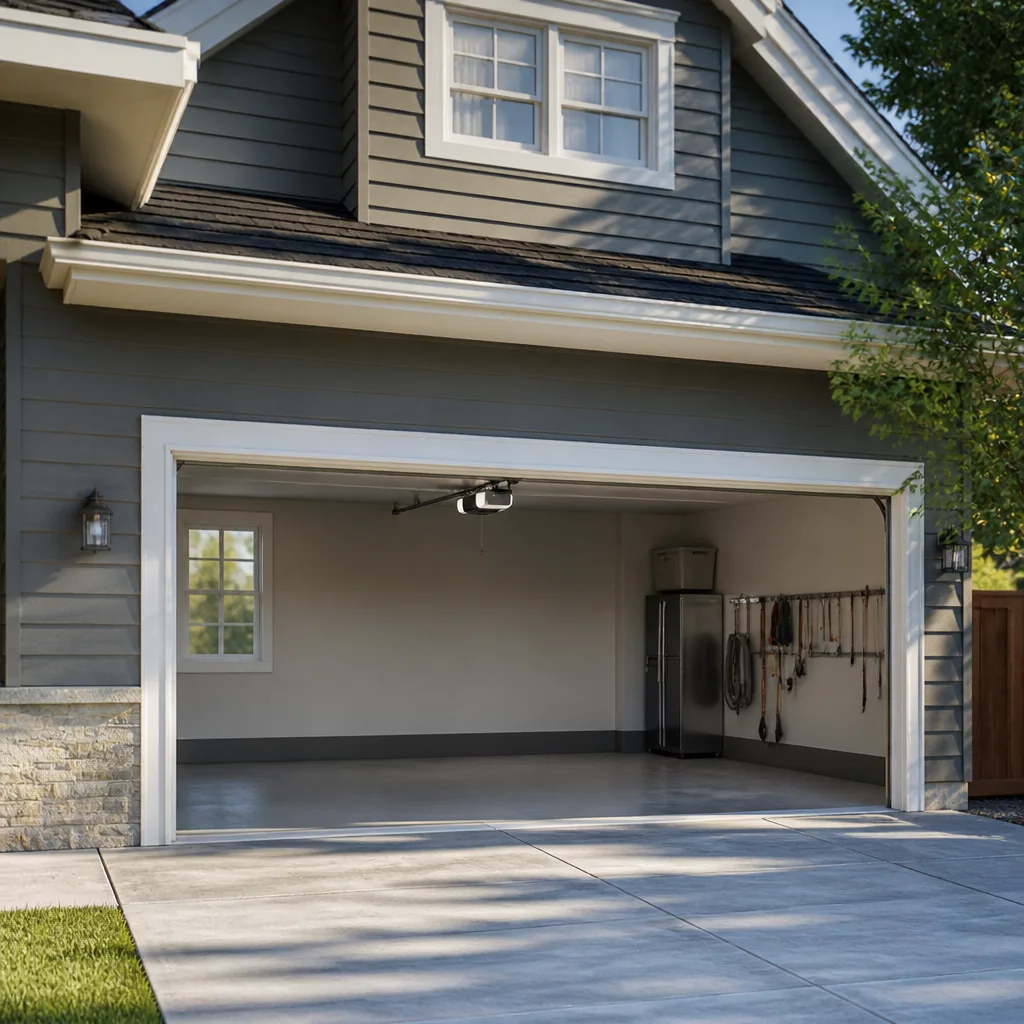 Chamberlain openers
Full 25-point door and opener safety check with every visit - springs, cables, rollers, tracks, and your LiftMaster or Chamberlain opener included
You get a price before we start. It does not change when the pro arrives.
Get your free estimateHow to Hire a Garage Door Contractor in Fort Lee: A Step-by-Step Guide
Most homeowners vet a garage door contractor by reading reviews and comparing three quotes. That’s backwards. Reviews tell you whether people liked the person who showed up. They don’t tell you whether that person knows the difference between a 12-inch and a 15-inch track radius, or why mixing a Clopay panel with a Wayne Dalton bottom section creates a sealing problem. A contractor who quotes over the phone without asking for your door’s headroom clearance measurement is guessing, and that guess often turns into a second service call when the wrong track radius gets installed. This guide gives you the questions that actually separate specialists from generalists, written from our vantage point working on garage doors across Fort Lee.
Quick Answer
Hire a Fort Lee garage door contractor by verifying their New Jersey Home Improvement Contractor registration first, then asking for three measurements before accepting any replacement quote (opening width, headroom, and backroom), then requesting a written estimate that itemizes parts and labor separately. A specialist asks you these questions before quoting. A generalist quotes first and measures later.
Styles & brands we work with
- Raised-panel steel
- Carriage house
- Modern flush
- Full-view glass
- LiftMaster openers
- Chamberlain openers
Table of Contents
- Why Garage Door Hiring Works Differently in Fort Lee
- The Three Measurements a Real Contractor Asks For
- How to Verify NJ HIC Registration (and What It Doesn’t Cover)
- What “Same-Day Service” Really Means in Fort Lee Traffic
- Brand-Specific Questions for LiftMaster, Chamberlain, and Genie Systems
- How to Read a Written Estimate Line by Line
- A 7-Step Vetting Process You Can Run in One Evening
- Spring Work and the Safety Question to Ask Every Time
Why Garage Door Hiring Works Differently in Fort Lee
Fort Lee sits on a ridge above the Hudson, and that geography shapes garage door work more than most homeowners realize. The town’s housing stock runs from older two- and three-family homes near the George Washington Bridge approach to mid-rise condominiums and newer townhouse developments along the western edge toward the Palisades. The doors on those buildings were installed across several decades, and the equipment varies wildly from block to block.
That matters when you hire. A contractor who works mostly in sprawling suburban towns where every door is a two-car, 16-foot Clopay installation will be on unfamiliar ground in Fort Lee’s tighter lots and narrow driveways. Headroom is frequently constrained on hillside properties, and low-clearance situations call for specific hardware. A technician who has never worked a torsion spring in a low-headroom setup will spend the first visit measuring and the second visit installing.
Fort Lee’s climate adds its own wrinkles. The wet, freeze-and-thaw winters over the Palisades ridge push a lot of moisture and grit into door tracks and rollers, and that accelerates wear on bottom seals and hinges. A door that would last years in a drier climate needs closer spring and cable attention here. When you hire, ask directly whether the contractor expects to address corrosion and grit wear, not just the failure that prompted the call.
Speed also matters more in Fort Lee than in most towns. The borough’s streets carry heavy commuter traffic, and getting a vehicle and equipment up steep, narrow driveways with limited turnaround space is its own skill. We handle Garage Door Repair Fort Lee calls with that reality in mind: arriving prepared with the right parts cuts a second trip that would otherwise mean a second window of waiting.
The Three Measurements a Real Contractor Asks For
Any legitimate quote on a new or replacement door begins with three measurements. If a contractor gives you a price before asking for them, treat the number as a placeholder.
- Opening width: The clear span between the jamb surfaces. Standard widths are 8, 9, 10, 12, 14, and 16 feet, and panels come in matching sizes. A width that doesn’t match a standard panel size requires modification or a custom order, which changes both price and lead time.
- Headroom: The vertical distance from the top of the door opening to the ceiling. This determines whether you can use standard torsion hardware or need low-headroom components. Getting it wrong means the door won’t clear the ceiling on open, and the fix is a reinstall, not an adjustment.
- Backroom: The distance from the door opening to the nearest obstruction behind it, like a structural beam or the back wall. This sets the track length and, critically, the track radius. A 12-inch radius track needs less backroom and fits tighter garages. A 15-inch radius track runs quieter and smoother but needs more space. Install the wrong radius in a shallow garage and the door won’t fully open without an immediate second call.
For sectional doors, a good contractor also asks whether you want a standard-lift, high-lift, or vertical-lift configuration, because the ceiling height and any mezzanine or storage above the door changes the answer. In Fort Lee’s smaller and hillside garages, this is not an abstract question. It comes up constantly.
Ask each contractor what measurements they need. The one who rattles off width, headroom, backroom, and track radius without prompting is the specialist. The one who says “I’ll come look and figure it out” is likely to figure it out twice.
How to Verify NJ HIC Registration (and What It Doesn’t Cover)
New Jersey requires home improvement contractors to register with the state Division of Consumer Affairs under the Home Improvement Contractor program. Registration is not the same as a license. It’s a formal registration that comes with a warranty requirement and a consumer complaint mechanism, and you can verify a contractor’s registration status through the state’s public lookup before you sign anything.
Here’s what HIC registration covers: it establishes that the contractor is registered to offer home improvement work, requires them to provide a written contract for the work, and ties them into the state’s home improvement warranty fund for qualifying disputes. It gives you a real place to escalate a problem.
What HIC Registration Does Not Cover
- It does not verify technical competence or hands-on skill with garage door systems.
- It does not confirm specific product training on brands like Amarr or Wayne Dalton.
- It does not guarantee the contractor carries insurance or that the coverage is adequate.
- It does not cover every type of job or every situation, so read the program rules for your specific project.
Ask for the registration number in writing and check it. Then ask separately for proof of insurance that lists garage door installation and repair as covered work. A registered contractor who can’t produce a certificate of insurance is a project waiting to go sideways. For more on how we approach garage door repair in Fort Lee, the details of what a legitimate operation should provide are the same.
What “Same-Day Service” Really Means in Fort Lee Traffic
“Same-day service” is one of the most abused phrases in this trade. It can mean anything from “we can be at your door within two hours” to “we’ll return your call today and we’ll come next Tuesday.” In Fort Lee specifically, same-day is achievable, but only for a contractor who plans around the borough’s traffic realities and understands how to dispatch efficiently.
Here’s how to read the promise realistically. First, ask what same-day actually applies to. Emergency repair on a broken door or a stuck car is one thing. A full new door installation is not a same-day job no matter who you call, because the door has to be measured, ordered, and delivered. A contractor who promises a same-day installation on a full replacement is either using stock sizes that may not fit or setting you up for disappointment.
Second, ask how dispatch works. The Ridge Road corridor, the approaches to the bridge, and the hillside streets west of Center Avenue all back up at predictable times. A local contractor knows to schedule around those windows or to work closer to home base during peak traffic. A dispatcher reading from a screen in another county does not.
Third, ask about hours explicitly. In Fort Lee, a door that fails after a storm at night is a security concern because the house is open. A good contractor will tell you honestly what they can cover and what they can’t. If you call us on a Saturday, we’re closed that day, but we’ll book you for Sunday. Emergency availability is a real capability when it’s structured that way, not a marketing line.
We treat emergency service as a core capability, not an afterthought, because a broken door that won’t close in a Fort Lee winter is a problem you can’t put off. When you need garage door opener repair fast, the difference between a contractor who has done this in your town and one who hasn’t shows up in the first fifteen minutes.
Brand-Specific Questions for LiftMaster, Chamberlain, and Genie Systems
If your opener is a LiftMaster, Chamberlain, or Genie, the contractor’s first few questions tell you whether they work on that brand regularly or are winging it. The three brands dominate the market, and each has known failure patterns. A specialist knows them. A generalist will ask you to describe the sound it makes.
Ask these brand-specific questions and listen to the answer:
- “Do you know the common failure points on my model?” For LiftMaster and Chamberlain chain-drive units, the gear assembly and travel-limits are frequent culprits. For Genie screw-drive systems, the rail and carriage wear differently. A vague answer tells you they’ll be troubleshooting from scratch on your dime.
- “Is my unit smart-home compatible, and does that change the board?” LiftMaster’s MyQ and Chamberlain’s Wi-Fi models have control boards and sensors that differ from legacy units. A technician familiar with the modern app-connected systems diagnoses faster. One who only knows older openers may misdiagnose a Wi-Fi connectivity fault as a board failure.
- “Do you carry the replacement sensors and remotes for my system or will you need to order them?” The answer tells you whether they can finish the job today or leave your door mid-repair.
- “What’s the diagnostic process?” A specialist runs a sequence: opener force settings, safety sensor alignment, travel limits, and remote output. A generalist pokes around and replaces parts until it works.
The same logic applies to the door itself. Ask what brands they install and service in Fort Lee. A contractor who is factory-familiar with Clopay or Amarr knows exactly which panels and hardware are orderable and which require custom lead times. Vague brand knowledge at the front of the conversation usually means generic parts at the back. We work on your brand – whether it’s LiftMaster, Chamberlain, Genie, Craftsman, or Raynor – because brand-familiar technicians cut down diagnosis time, and diagnosis time is what you’re paying for.
How to Read a Written Estimate Line by Line
A written estimate is your best diagnostic tool for judging a contractor. Get it in writing before any work starts, and read it with these questions in mind.
Parts and Labor Should Be Separated
A fair estimate lists materials – springs, drums, cables, hinges, rollers, track, opener parts – and labor as separate line items. When everything is rolled into one “all-in” price, you can’t see whether the contractor is marking up parts heavily or quoting fair labor. Ask for the separation even if the contractor prefers to bundle.
Watch for Padded Parts Markup
Parts markup varies by contractor, but the check is simple: compare the itemized parts prices against the general range you’d expect for that component. If a single spring or a set of rollers appears at an unusually high multiple of a typical retail part price, the estimate is padded. The opposite problem also exists: unrealistically low parts pricing with vague labor that balloons once the technician is on-site. A fair estimate has a sensible ratio of parts to labor for the scope of the job.
The Written Estimate Sets the Final Price
Insist that the estimate states the price is firm for the described work and that any change requires your approval before additional work begins. The single largest complaint in this trade is a final invoice larger than the quote. A written, itemized estimate that you sign off on – before a technician touches the door – is the only protection. If a contractor won’t put the price and scope in writing, that’s your answer.
Check the Scope Language
Make sure the estimate names the specific work: which springs, how many, what gauge, which brand of opener parts, and whether disposal of the old components is included. If you’re replacing a door, confirm the estimate covers removal, the new door, hardware, track, and cleanup. Vague scope language is where surprise add-ons live.
For spring work specifically, ask for the garage door spring repair line to show whether the price is for one spring or a matched pair. Springs almost always fail in pairs, and a quote that prices one and installs two is not a communication problem, it’s a pricing problem.
A 7-Step Vetting Process You Can Run in One Evening
You don’t need to be a trade expert to vet a garage door contractor in Fort Lee. You need a structured process. Here it is.
- Verify HIC registration. Look up the contractor’s New Jersey Home Improvement Contractor registration through the state Division of Consumer Affairs public lookup. Do this before you call.
- Ask for the measurements. When you call, ask what they need to know to quote accurately. If they name opening width, headroom, backroom, and track radius, you’ve found someone who knows the work.
- Request proof of insurance. Ask for a certificate of insurance showing general liability coverage for the work. A registered contractor with no insurance proof is a risk you don’t need to accept.
- Ask about brand experience. Name your opener or door brand and listen. Specific answers reveal a specialist. Generic answers reveal a generalist.
- Get a written, itemized estimate. Parts and labor separated. Scope named. Price firm for the described work. Signed before any work begins.
- Ask what same-day means for your job. Repair is a same-day question. Replacement is a measure-and-order question. Match the answer to the job type.
- Ask the spring safety question. If your door uses torsion springs, ask whether the technician handles spring replacement regularly and how they approach the safety protocol. This one question filters out more than any review score.
That process takes an evening. It saves you the far more common outcome: a second contractor called in to fix a first contractor’s guess.
Spring Work and the Safety Question to Ask Every Time
Garage door springs hold enormous stored energy. A torsion spring under tension is one of the highest-risk components in a residential structure, and the injury risk from mishandling one is severe. That’s why spring work belongs to trained technicians with proper winding bars and protocols, not to a general handyman with a socket set and a YouTube tutorial.
Ask any contractor three things about spring work. First: “Do you replace both springs when one fails, and why?” A specialist explains that a matched pair shares the load, so replacing one leaves the older spring to take the full load and fail soon after – often within weeks. Second: “What winding tools do you use?” A vague answer is a red flag. Third: “What’s your procedure for securing the door before starting?” A technician who can describe the process clearly and soberly is a technician who takes it seriously.
If your door has extension springs rather than torsion springs, the safety question is worth asking too. Extension springs need a containment cable for safety, and a contractor who doesn’t mention that is skipping a step. In Fort Lee, where wet winter weather accelerates wear on hardware, spring inspection is worth doing as part of any repair call.
Common Mistakes to Avoid
- Accepting a phone quote for a replacement. A price given before the contractor knows your width, headroom, and backroom is a placeholder. It disappears the moment the measurement tape comes out.
- Hiring on price alone. The lowest quote in Fort Lee is often the quote that didn’t include disposal, track, or the second spring. Compare scope, not the bottom line.
- Skipping the HIC check. It takes five minutes online. Skipping it means you lose your main escalation path if something goes wrong.
- Believing “same-day” applies to a full replacement. Replacement requires measurement, ordering, and delivery. Same-day is for repair and emergency work. Expecting otherwise sets up a bad experience.
- Forgetting that Fort Lee driveways are steep and narrow. Ask whether the contractor has worked hillside lots with limited turnaround. Equipment access changes the job.
- Handing over the estimate without a signature or scope. The written estimate is your contract. Read it, sign it, and confirm the price is firm before work starts.
- Treating all opener repairs the same. A modern Wi-Fi LiftMaster or Chamberlain board behaves differently from a legacy unit. Generic troubleshooting wastes your time.
See the difference
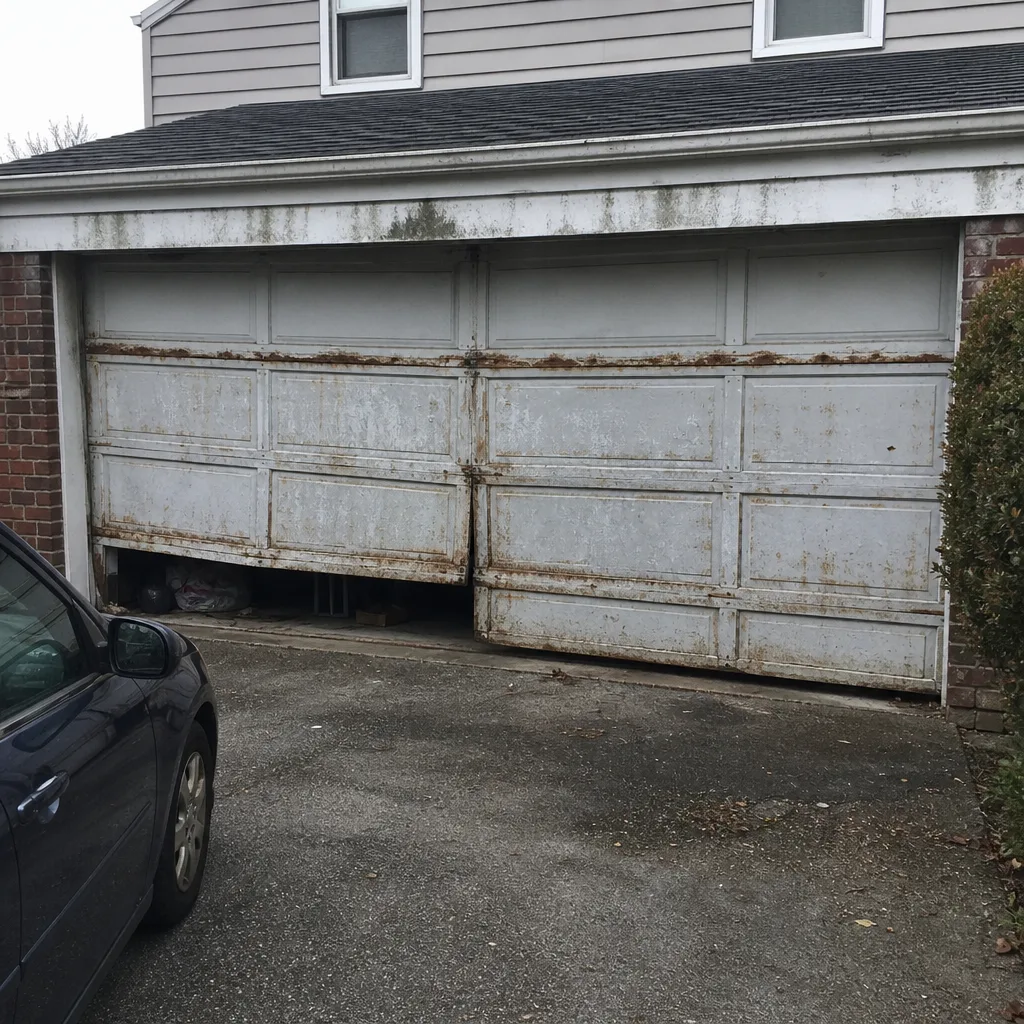 Before
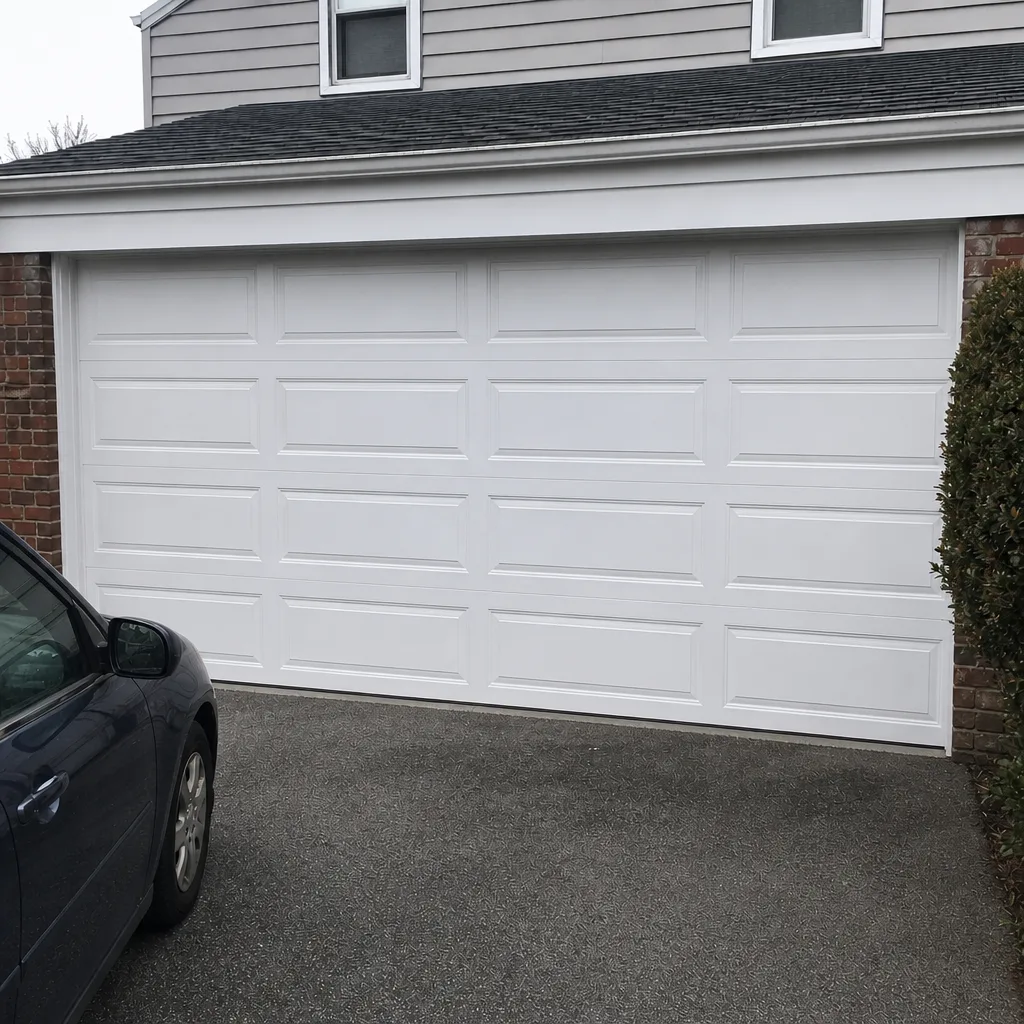 After
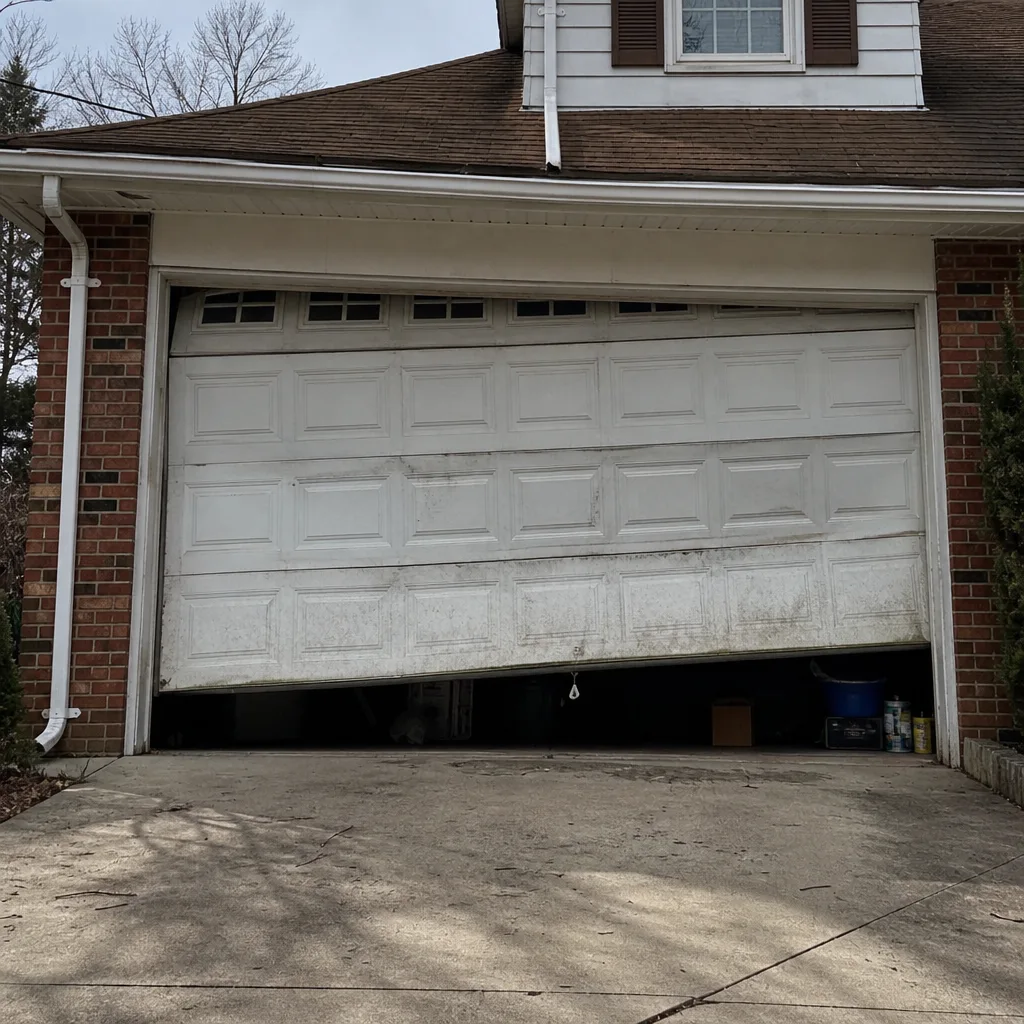 Before
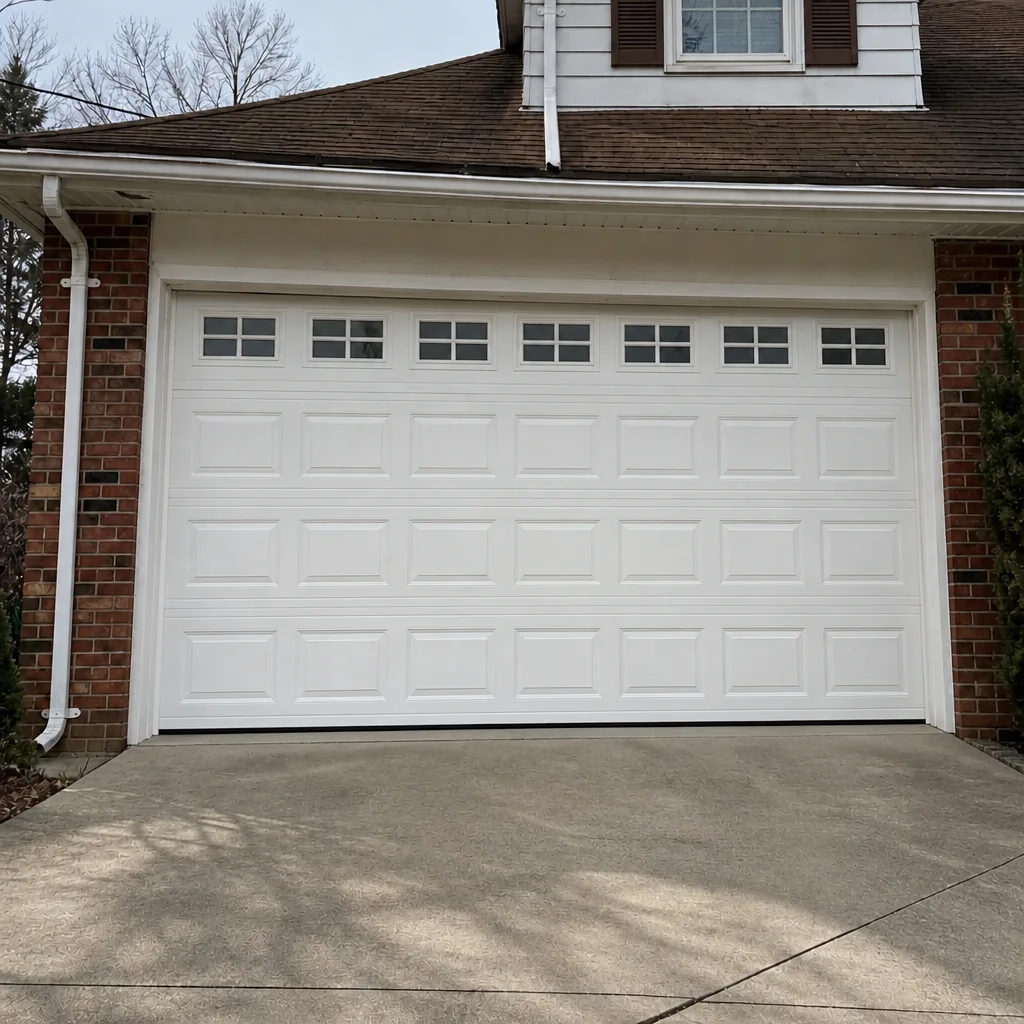 After
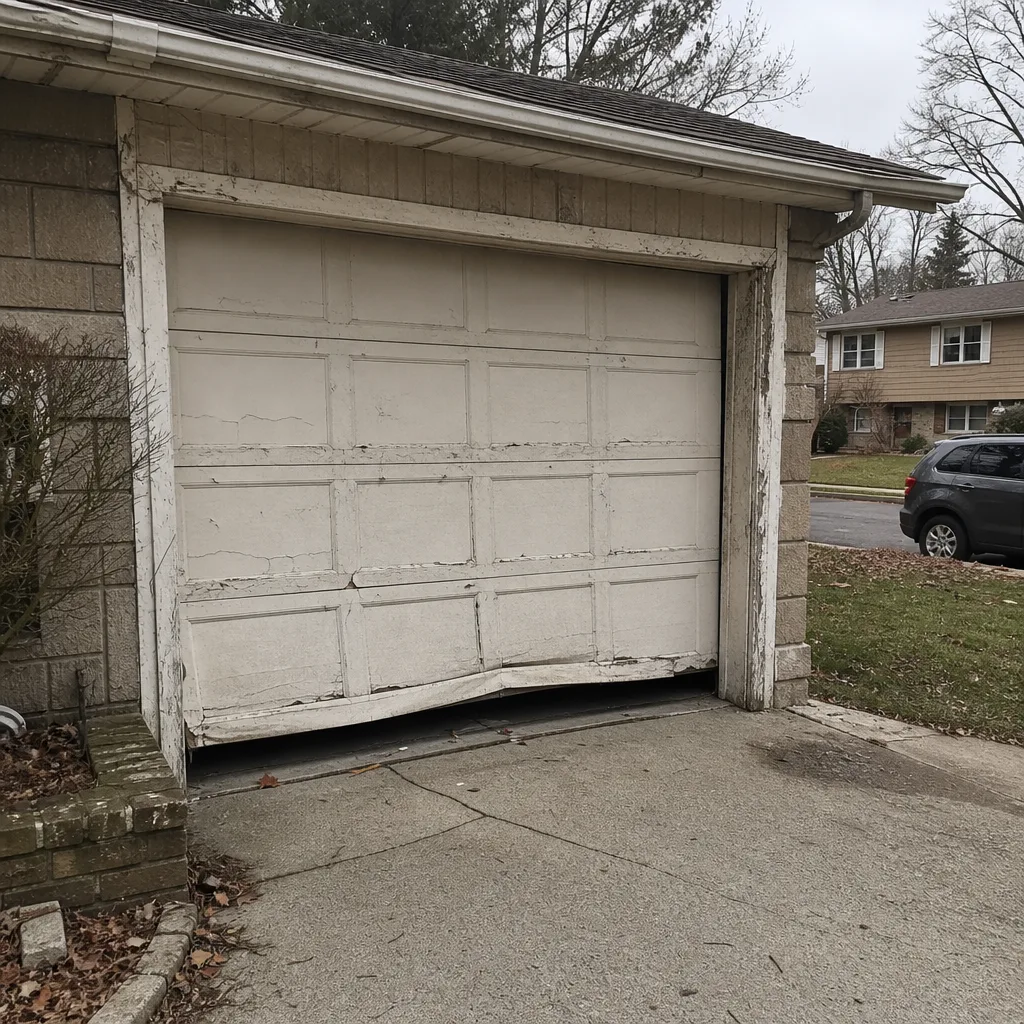 Before
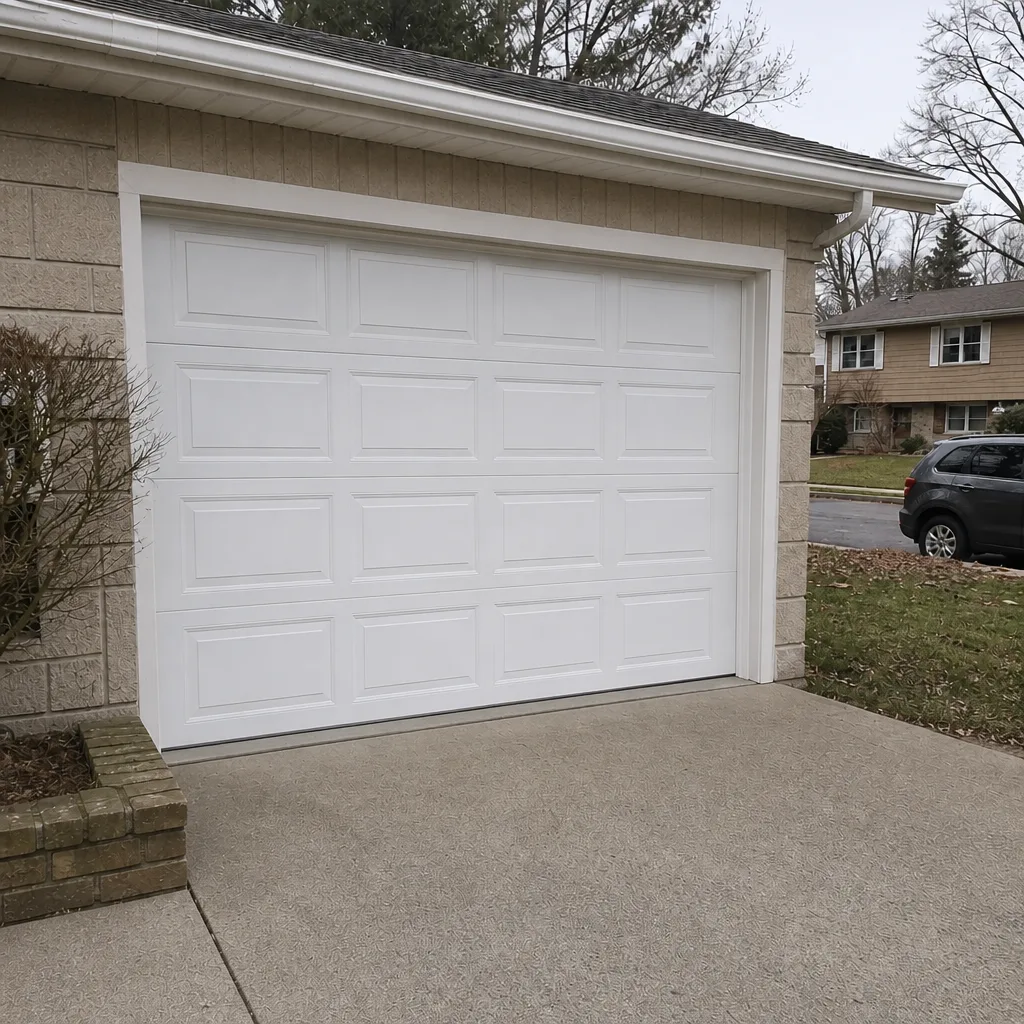 After
When to Call a Professional
Some driveway-level fixes are safe and sensible. Adjusting a safety sensor that has drifted, replacing a remote battery, or clearing grit from a track are all reasonable do-it-yourself territory. That list is short, and the rest belongs to a technician.
Call a professional if your door has a torsion spring that has snapped, if the door is stuck halfway and won’t move without force, if a cable is frayed or hanging, if the opener hums but the door doesn’t move, or if the door is off its track. Call immediately if the door won’t close and your house is open. In Fort Lee’s winter, a door that won’t seal is also a wind, ice, and security problem. Garage Door Repair Fort Lee offers free estimates in Fort Lee – call (877) 806-9927 to get a technician scheduled with a written price before any work begins.
Frequently Asked Questions
Ask for their NJ HIC registration number and verify it, then ask what measurements they need to quote a replacement (opening width, headroom, and backroom), what brands they service, and how they handle spring safety. A specialist answers all three without hesitation. Call (877) 806-9927 for an exact quote – estimates are free.
Look up the contractor through the New Jersey Division of Consumer Affairs Home Improvement Contractor public lookup, and ask for the registration number in writing. Registration is not a license – it doesn’t verify technical skill – but it establishes a formal consumer pathway. Pair it with a request for proof of insurance.
Same-day is realistic for repair and emergency calls, and we plan dispatch around Fort Lee traffic to make it happen. It is not realistic for a full door replacement, which requires measurement and ordering. If your door has failed and won’t close, call (877) 806-9927 now.
No. A replacement door has to be measured, ordered at the correct width and panel configuration, and delivered before installation. Any contractor promising same-day installation on a full replacement is either sizing from stock or setting up a callback. Expect a measure-and-order timeline instead.
Headroom determines whether your door can use standard torsion hardware or needs a low-headroom setup, and it sets the track radius. Quoting without it risks installing a track that won’t let the door clear the ceiling – which means a second visit and a reinstall. A legitimate contractor asks for it before giving a price.
Replace both. A matched pair shares the load, and replacing just one leaves the older spring carrying the full load, which often leads to a second failure within weeks. The estimate should price the pair, not one spring – ask for the line item to be explicit.
The Bottom Line
Hiring a garage door contractor in Fort Lee comes down to whether the person on the phone knows your door system or is guessing. Verify the NJ HIC registration. Ask for the three measurements – opening width, headroom, backroom – before accepting any replacement quote. Ask brand-specific questions about your opener and listen for specific answers. Get a written, itemized estimate that separates parts from labor and states the price is firm. And ask the spring safety question every time, because high-tension spring work is the one job you should never hand to a generalist. Run the seven-step vetting process once, and you’ll spot the difference between a specialist and a guesser before the work starts.
Contact
When you’re ready for a straight answer about your door, call Garage Door Repair Fort Lee at (877) 806-9927 for a free estimate. We work on LiftMaster, Chamberlain, Genie, Clopay, Amarr, Wayne Dalton, Craftsman, and Raynor systems – door repair, opener repair, spring replacement, and full installation. Our technicians have up to 11 years of experience, and the price is quoted and agreed before any work starts. Emergency door won’t close? Call us.
Written by the team at Garage Door Repair Fort Lee.