Last updated November 21, 2026
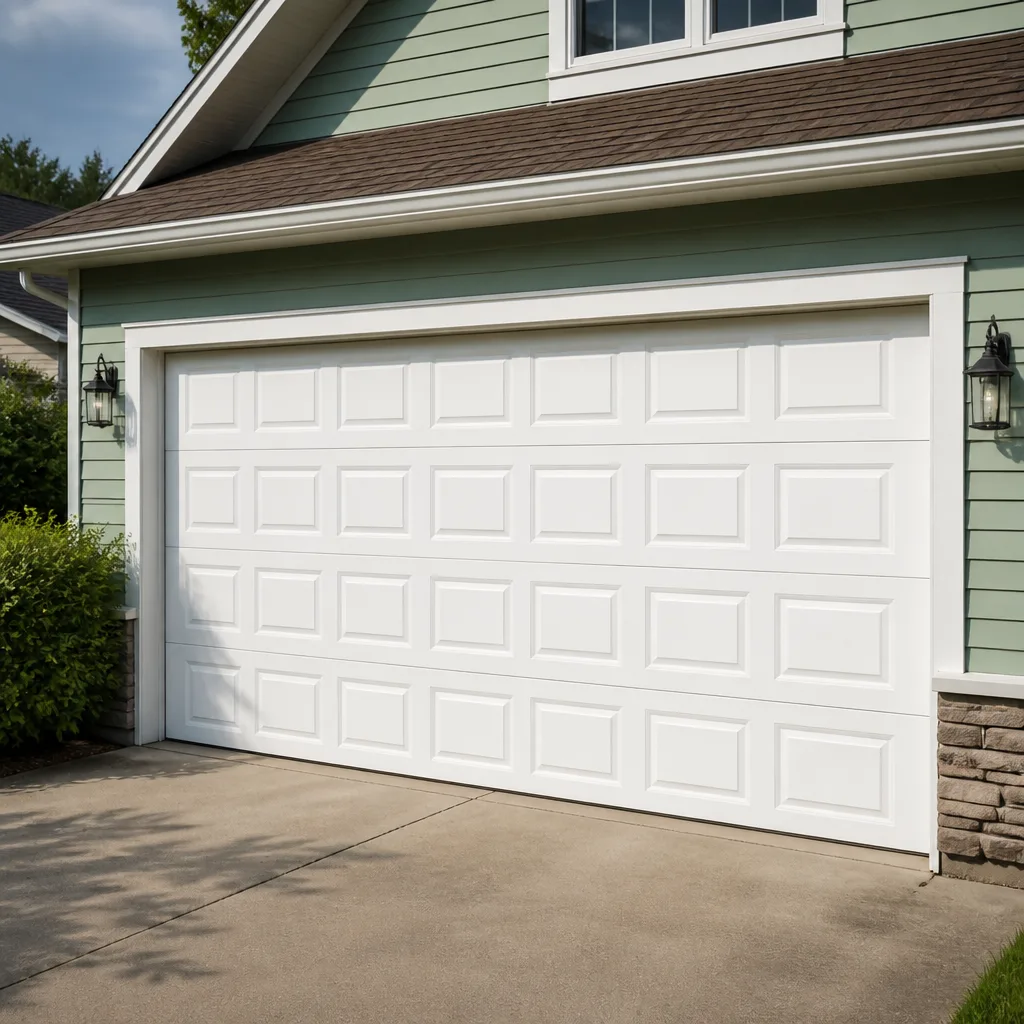 Raised-panel steel
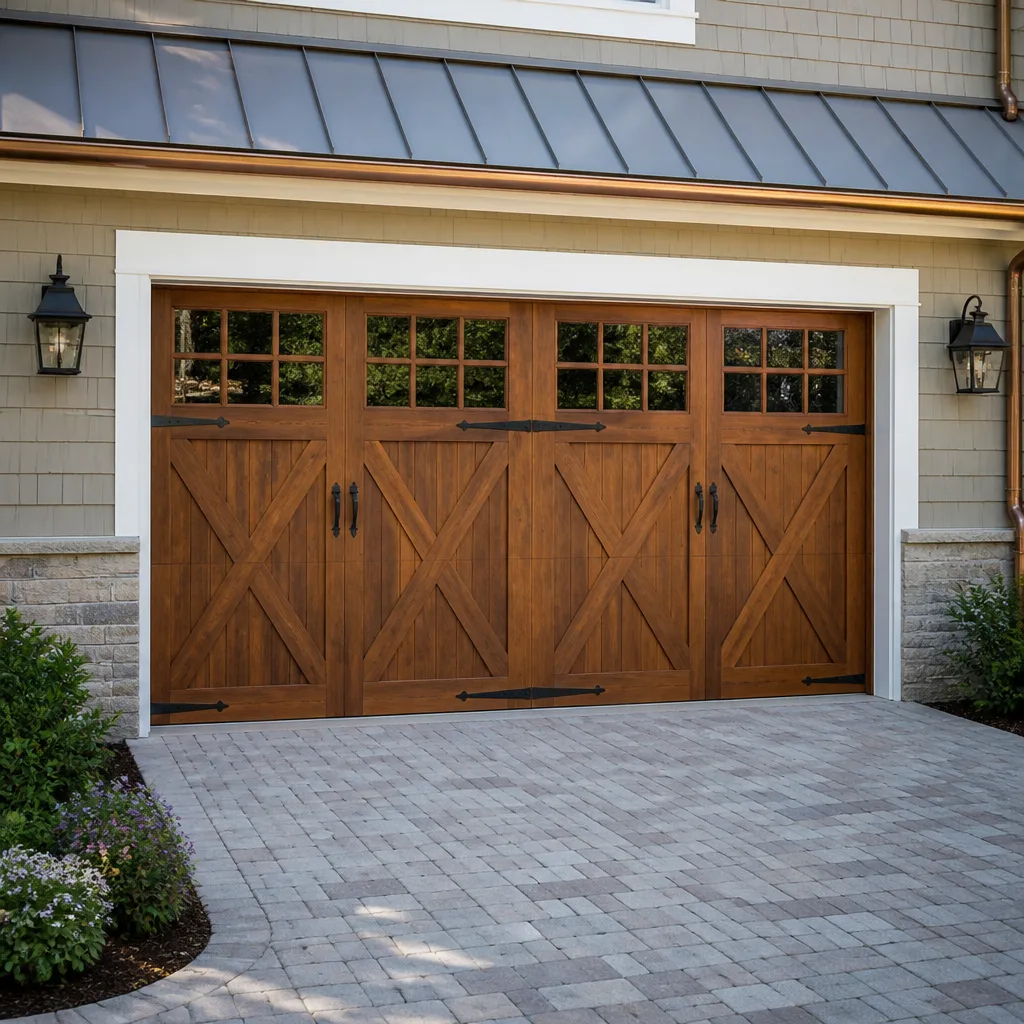 Carriage house
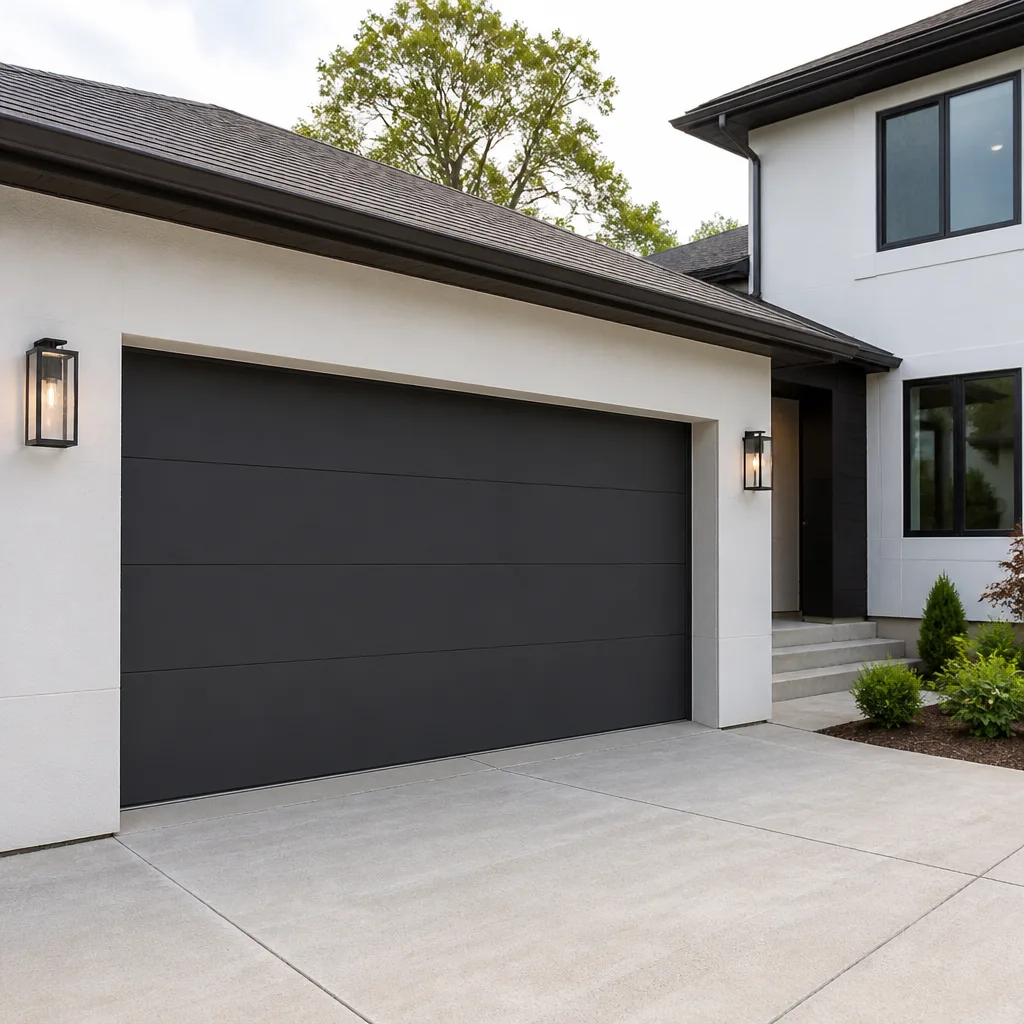 Modern flush
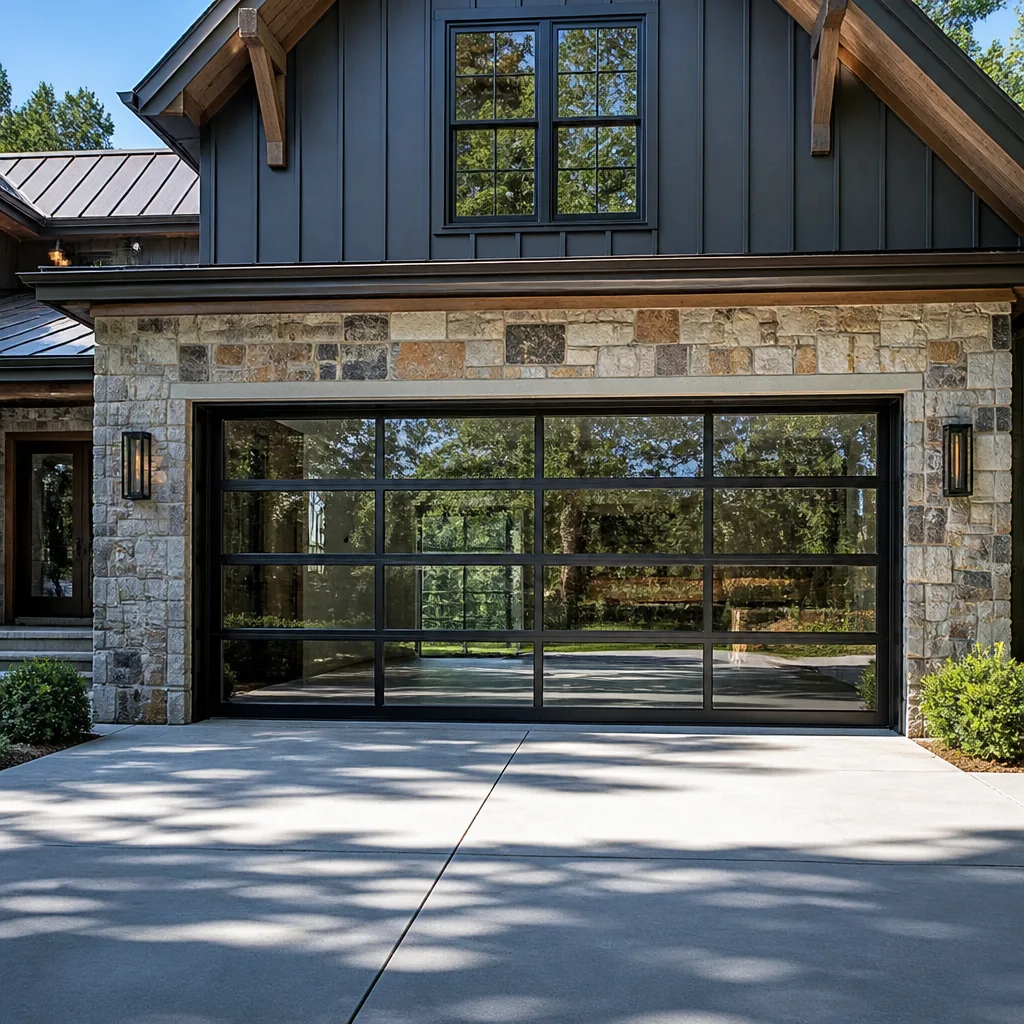 Full-view glass
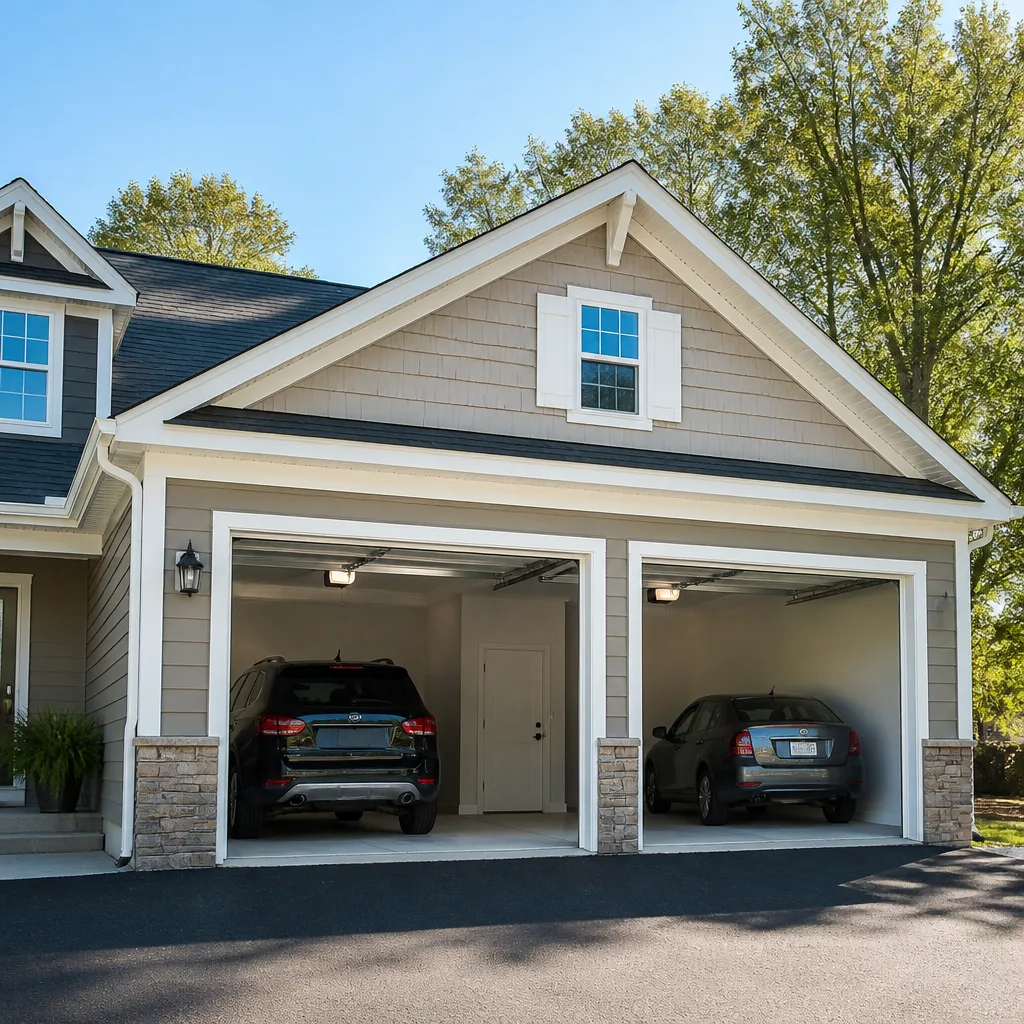 LiftMaster openers
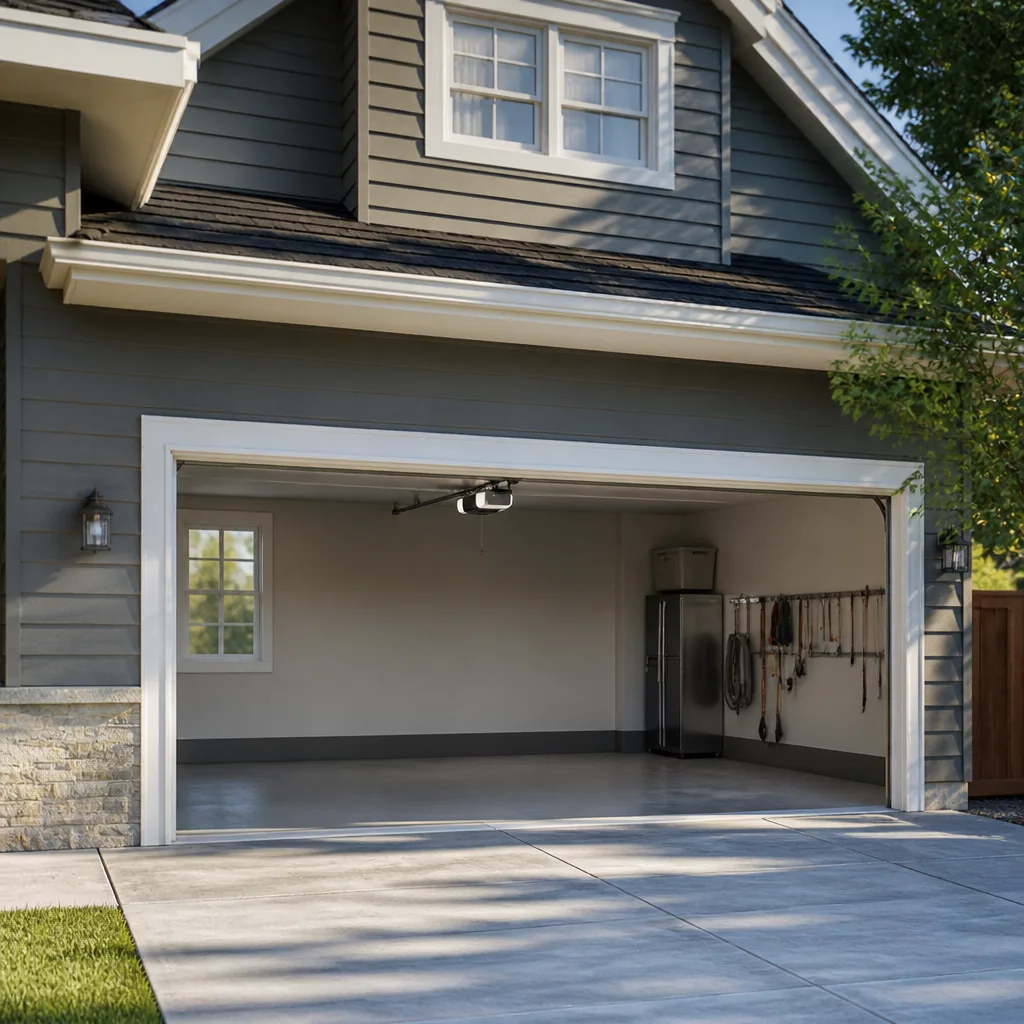 Chamberlain openers
Full 25-point door and opener safety check with every visit - springs, cables, rollers, tracks, and your LiftMaster or Chamberlain opener included
You get a price before we start. It does not change when the pro arrives.
Get your free estimateGarage Door Warning Signs: A Fort Lee Homeowner’s Reference Guide
A garage door that hesitates for half a second before it moves isn’t “getting old.” That pause is a measurable symptom – usually a motor capacitor losing its charge or a spring no longer carrying its share of the door’s weight – and left alone it tends to turn into a full failure within weeks. Most warning-sign guides stop at the obvious stuff: loud banging, a door that won’t close. The signs that actually predict trouble 30 to 60 days out are quieter. This guide is built around those early indicators, so you get a repair window instead of a Sunday morning emergency. Below you’ll learn how to tell spring wear from opener wear, read an uneven bottom seal correctly, spot cable fraying with your eyes alone, and run a balance test that quantifies spring wear before it becomes a safety issue.
Quick Answer
The earliest garage door warning signs in Fort Lee are a brief hesitation before the door moves, a motor that sounds strained while the door itself moves smoothly, visible fraying or kinks in the lift cables, a bottom gap that changes from one side to the other, and a door that fails the manual balance test. Any one of these means the system is out of adjustment or a component is wearing, and most are cheaper to fix now than after a failure. We work on LiftMaster, Chamberlain, Genie, Clopay, Amarr, Wayne Dalton, Craftsman, and Raynor equipment, which means we usually recognize a brand-specific symptom the moment we hear it.
Styles & brands we work with
- Raised-panel steel
- Carriage house
- Modern flush
- Full-view glass
- LiftMaster openers
- Chamberlain openers
Table of Contents
- The Half-Second Hesitation: What It Tells You
- Spring Wear vs. Opener Wear: Telling Them Apart
- The Balance Test: Measuring Spring Wear Before It Fails
- The Uneven Bottom Gap: Foundation or Track?
- Cable Fraying You Can See Without Tools
- Why Doors Reverse in Cold Weather
- Reading the Noise: A Symptom Map
- When a Warning Sign Becomes a Call
The Half-Second Hesitation: What It Tells You
A door that pauses before it starts moving is the single most overlooked early warning sign we encounter. Homeowners in Fort Lee describe it as the door “thinking about it.” In practice, that hesitation comes from one of two places, and they lead to different repairs.
The first cause is capacitor degradation in the opener motor. The start capacitor gives the motor its initial jolt of torque. As it weakens, the motor needs a moment longer to build enough force to get the door moving. On brands like LiftMaster and Chamberlain, this often shows up first on cold mornings, when the grease in the rail is thicker and the motor needs more help. Left alone, the capacitor eventually fails outright and the opener hums without moving the door at all.
The second cause is spring imbalance. If the torsion spring has lost some of its tension, the opener has to lift more of the door’s weight than it was designed to. The motor strains, the door hesitates, and the whole system runs hotter and louder.
Here’s how to start narrowing it down:
- Disconnect the opener using the manual release (usually a red cord hanging from the rail).
- Lift the door by hand to about waist height.
- If it feels heavy and won’t stay put when you let go, the springs are the problem.
- If it lifts easily by hand but hesitates when the opener is engaged, the opener is the problem.
That single test separates the two most common causes of a hesitating door. If you’d rather not diagnose it yourself, we handle both repairs, and you can reach us through our garage door repair service.
Spring Wear vs. Opener Wear: Telling Them Apart
Spring wear and opener wear get confused constantly, and that confusion costs homeowners money. The two failures feel similar from the driver’s seat, but they’re completely different repairs. Getting the diagnosis right the first time is what keeps a simple fix from turning into a replacement.
Signs of spring wear:
- The door feels heavy when you lift it by hand.
- The door won’t stay open at waist height; it sags back down.
- You hear a sharp metallic snap or a loud bang at some point (a spring may have already broken).
- The door lifts a few inches and then stops, or the opener strains visibly.
- A visible gap appears in the coil of a torsion spring mounted above the door.
Signs of opener wear:
- The door moves smoothly by hand but the motor sounds labored.
- The opener hums but the door doesn’t move at all (often a capacitor or gear failure).
- The door reverses immediately after starting to close.
- The remote or wall button works only intermittently.
- The opener’s logic board or safety sensor light flashes in a pattern.
In our experience across Fort Lee, spring wear shows up first as a weight problem, while opener wear shows up first as a control problem. A door that’s hard to lift needs spring attention. A door that lifts fine but won’t respond to commands needs opener attention. If both symptoms appear at once, the springs usually caused the opener to work harder and fail in sympathy. Our garage door spring repair team can confirm which component is failing before any parts are ordered.
The Balance Test: Measuring Spring Wear Before It Fails
You can quantify spring wear with a two-minute test that requires no tools and no technical background. We recommend running it twice a year, and again any time you notice the door hesitating. It’s the single most useful diagnostic a homeowner can do on their own.
- Close the door completely and disconnect the opener with the manual release cord.
- Lift the door by hand to about halfway (roughly waist height) and stop.
- Let go. A healthy door stays put at that height, or drifts only slightly.
- If the door sags back toward the floor, the springs are losing tension.
- Repeat the test at the fully open position. A door that won’t stay open on its own is also showing spring wear.
What the result means: a door that holds at halfway is balanced and its springs are carrying the load they should. A door that drops even a few inches is telling you the springs are weakening. The rate of drift is a rough measure of how far the wear has progressed. A slow drift means you have time to schedule a repair. A fast drop means the spring is close to failing and the door should stay closed until it’s serviced.
This is also why we emphasize spring work as a professional job. Torsion springs are under high tension, and adjusting or replacing one without the right winding bars and training can cause serious injury. If the balance test shows wear, that’s the point to call rather than attempt a fix. Our technicians have up to 11 years of experience with this exact repair.
The Uneven Bottom Gap: Foundation or Track?
An uneven gap along the bottom of a closed garage door looks the same whether the cause is foundation settling or a bent track, and the two need very different responses. Getting this diagnosis wrong is one of the more expensive mistakes a homeowner can make in Fort Lee, where older homes sit close together on lots that have seen decades of freeze-thaw cycles.
When it’s foundation settling:
- The gap is gradual and wedge-shaped, wider at one corner than the other.
- The floor slab itself slopes; a level or a marble rolled along the floor shows the slope.
- The door’s top edge stays even across its width when closed.
- The gap appeared slowly over months or years.
When it’s a bent or misaligned track:
- The gap appeared suddenly, often after the door was bumped or the opener failed mid-cycle.
- The vertical track is visibly out of plumb or bowed when you sight up it.
- The door scrapes or rubs on one side as it travels.
- The top edge of the door is not level across its width.
A track issue is a straightforward adjustment or track replacement. A foundation issue means the door has to be fitted with a new bottom seal or threshold to bridge the gap, and the underlying slab movement is a separate concern for a different trade. Because we work only on garage doors and openers, we can tell you which one you’re looking at without upselling you a service we don’t offer. If it’s the door, we fix the door.
Cable Fraying You Can See Without Tools
The lift cables on a sectional garage door are the components most likely to fail without warning, and they usually show visible signs first. You don’t need to touch them. Look, don’t grab; fraying cables can snap and cause serious injury.
Here’s what to look for with the door closed and a flashlight:
- Frayed strands. The cable should look like a smooth, tight braid. A cable with loose strands or a fuzzy appearance near the drum is beginning to fail.
- Kinks or sharp bends. A kink in a cable is a weak point that will break under load.
- Rust-colored staining. A reddish or brown stain on the cable or the drum indicates corrosion or wear that weakens the strands.
- Cables wound unevenly on the drum. A cable piling up or crossing itself will eventually ride off the drum and drop the door on one side.
- A slack cable. If one cable is looser than the other, the door is unbalanced and at risk.
If you see any of these, stop using the door and keep it closed. A snapped cable can send the door crashing down on one side, and the spring handling the other side will then be under uneven load. This isn’t a job for a visual inspection and a “let’s see what happens” attitude. The local professional we connect you with can replace cables and re-balance the system the same visit.
Why Doors Reverse in Cold Weather
A door that reverses before it hits the ground in cold weather usually has a sensor calibration problem, not a sensor failure. The fix is often an alignment adjustment, not a new safety sensor. Understanding the difference saves Fort Lee homeowners the cost of unneeded parts.
Garage door photo-eye sensors use an infrared beam across the opening. When the beam is broken, the door reverses. In cold weather, a few things happen at once:
- The plastic or metal brackets holding the sensors shift slightly with temperature changes.
- The lens can fog or cloud, scattering the beam.
- Sunlight angles change with the season and can blind one sensor.
- The door’s track can shrink and move the door’s frame, affecting the sensor’s reference point.
Before assuming the sensor is dead, check three things:
- Alignment. Each sensor has an indicator light. If it’s not solid, the sensors aren’t seeing each other. Sight along the line from one to the other and look for anything that’s knocked them out of line.
- Obstruction. Leaves, ice, or a fallen object at the base of one sensor will break the beam. Clear the area and re-test.
- Sunlight. If the door only reverses at a specific time of day, direct sun is likely blinding the receiving sensor. A small shade or repositioning fixes this.
If the sensor’s indicator light is solid but the door still reverses, the sensor or the wiring has failed. That’s the point to call. On modern smart openers, you can often see the sensor status in the app before you go out to look. If the opener needs service, our garage door opener repair team handles both legacy and Wi-Fi-enabled systems from the major brands.
Reading the Noise: A Symptom Map
Garage door sounds are like a check-engine light that speaks. Each noise pattern points to a specific component, and learning to read them turns guesswork into a targeted repair. Here’s the map we use:
- Sharp bang or snap, then a door that won’t lift: a torsion spring has broken. Stop using the door and keep it closed until a professional replaces the spring.
- Rattle on every cycle: loose hardware – hinges, brackets, or the operator rail. Usually a straightforward tightening, but it can indicate a worn roller or hinge.
- Grinding or scraping: a worn roller, a bent track, or the door rubbing on the frame. The door is likely out of alignment.
- Humming without movement: opener motor or capacitor failure, or a stripped drive gear.
- Squealing: dry or worn rollers and hinges; sometimes the opener’s gear and sprocket.
- Popping when the door opens: torsion spring winding or a cable riding off a drum. Don’t ignore this one.
On brands like Wayne Dalton, Craftsman, or Raynor, some of these sounds pair with specific parts – a particular roller style, a particular drum design – that a generalist handyman won’t have seen before. We’re factory-familiar with these brands, so we can name the part from the sound and the door type in most cases.
Common Mistakes to Avoid
- Replacing the opener when the springs are the problem. A strained motor often points to failing springs. Homeowners replace a working opener and find the new one struggles with the same door. Test with the manual release first.
- Ignoring the hesitation. A half-second pause becomes a full failure within weeks. Book the repair while the door still works.
- Touching the torsion spring yourself. Torsion springs are under extreme tension. Improper adjustment can cause serious injury. Leave spring winding to trained technicians.
- Adjusting the bottom seal instead of the track. If the gap is caused by a bent track, a new seal won’t close it. Diagnose foundation vs. track first.
- Assuming a winter reverse means a dead sensor. Check alignment, obstruction, and sunlight first; you may avoid a sensor replacement entirely.
- Greasing everything. Some garage door components shouldn’t be greased, and the wrong lubricant attracts dirt and accelerates wear. Stick to the manufacturer’s guidance for your opener and door.
- Calling a general handyman for a brand they’ve never serviced. Modern smart openers and specific door brands have their own quirks. A specialist diagnoses faster and gets it right the first time.
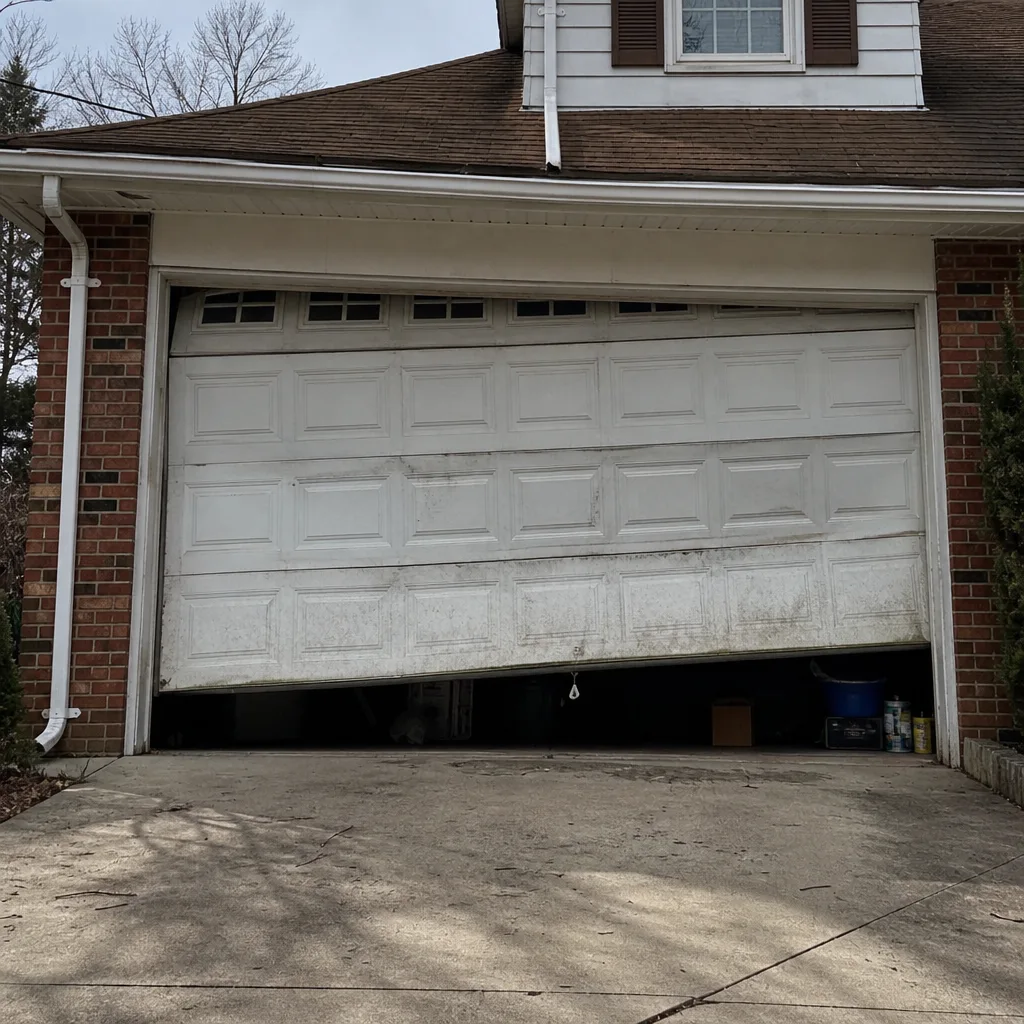
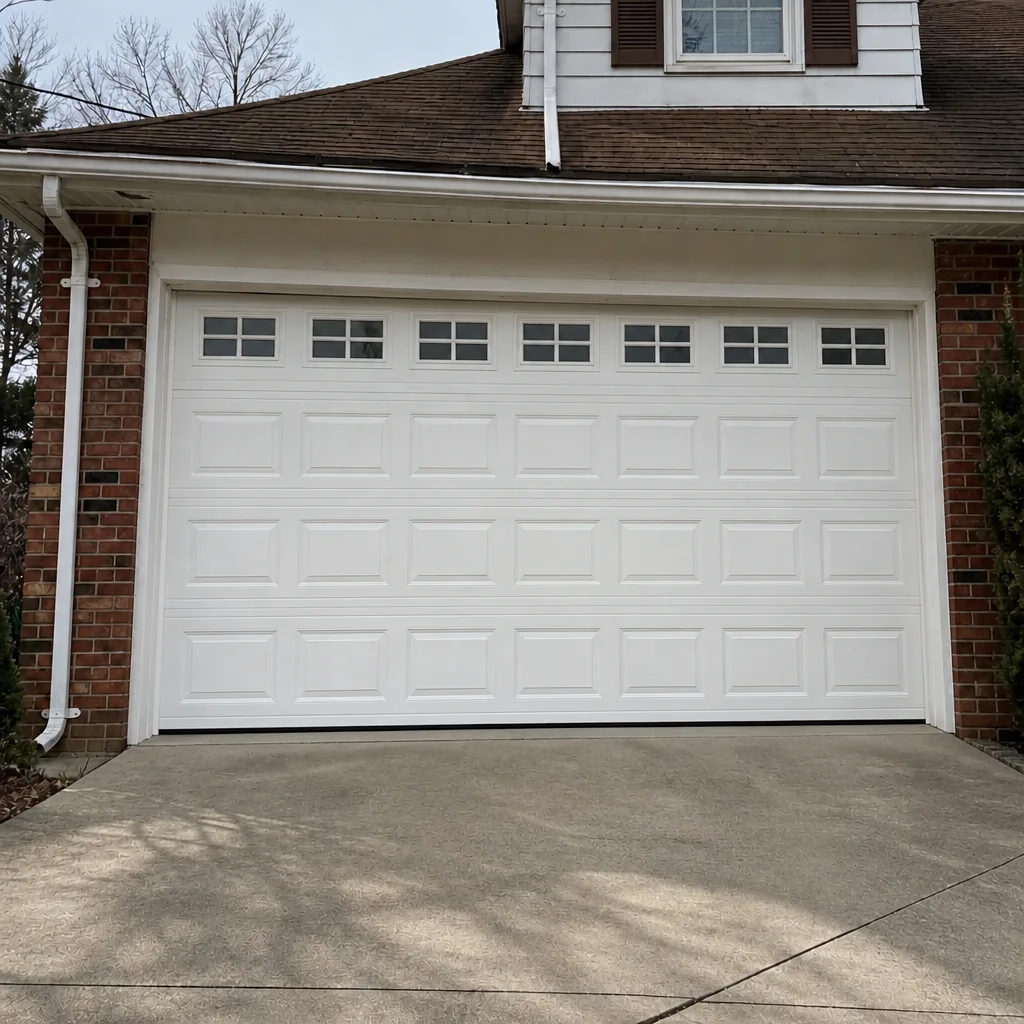
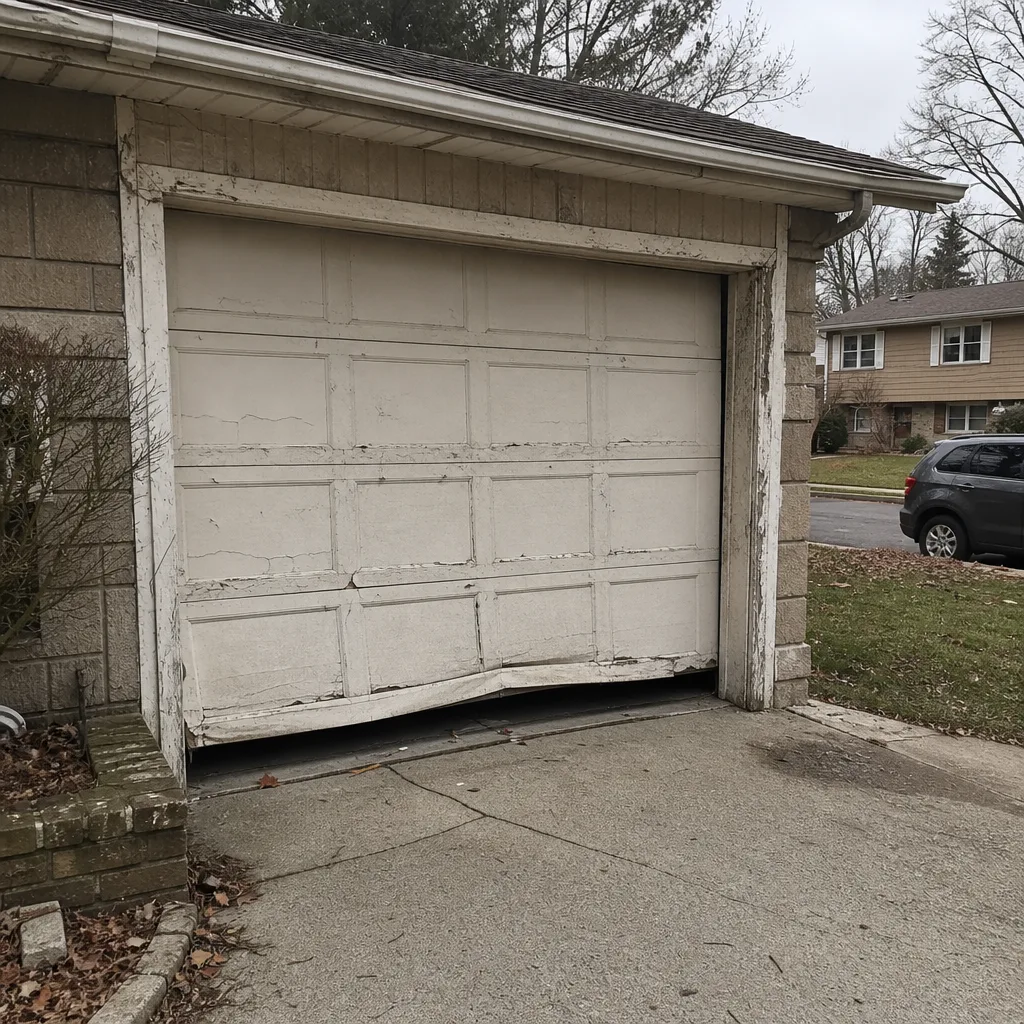
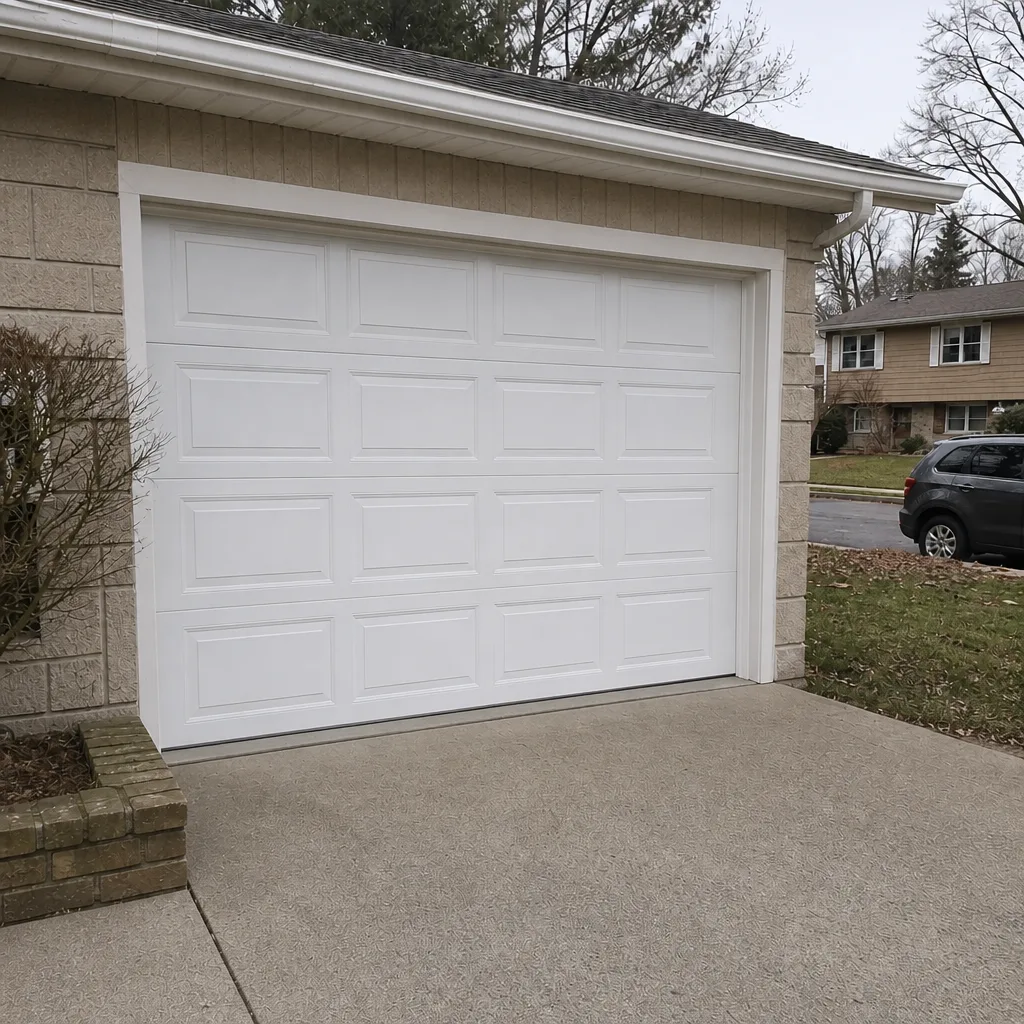
See the difference
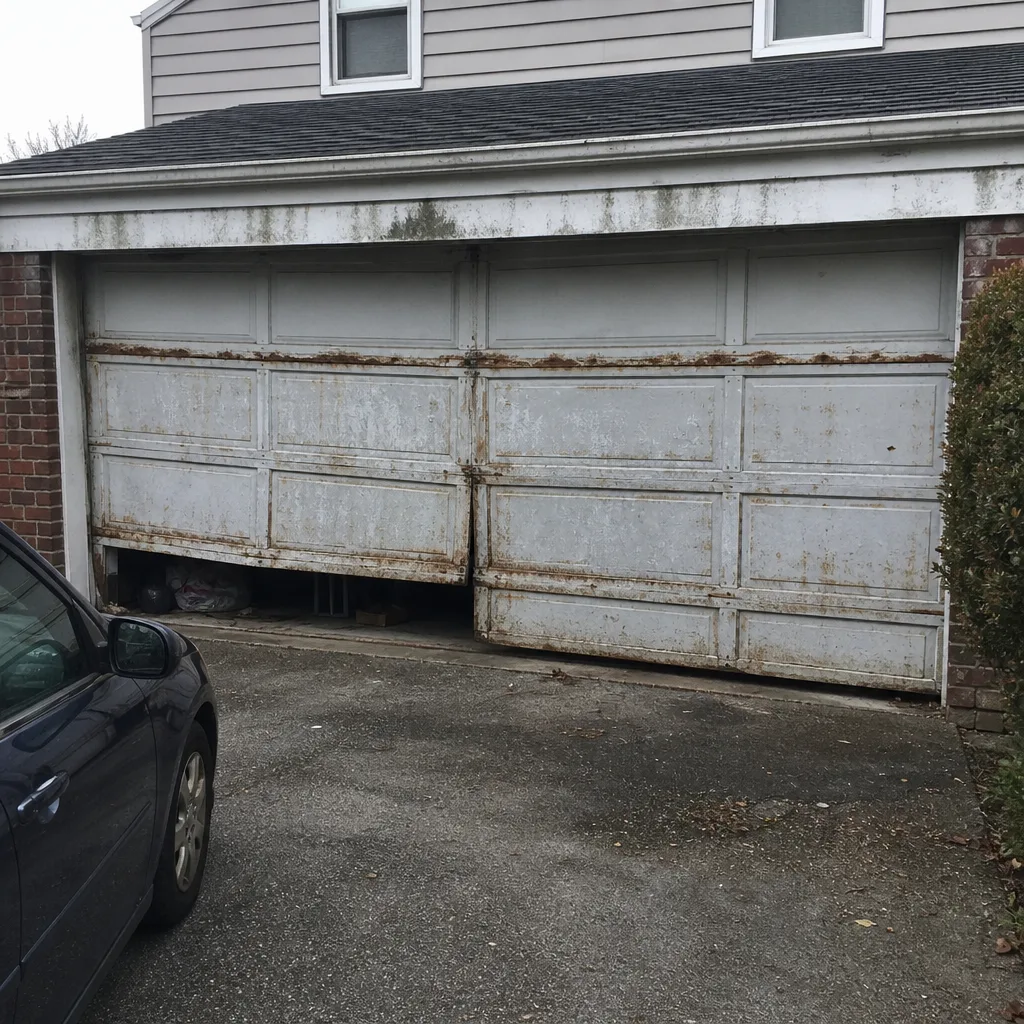 Before
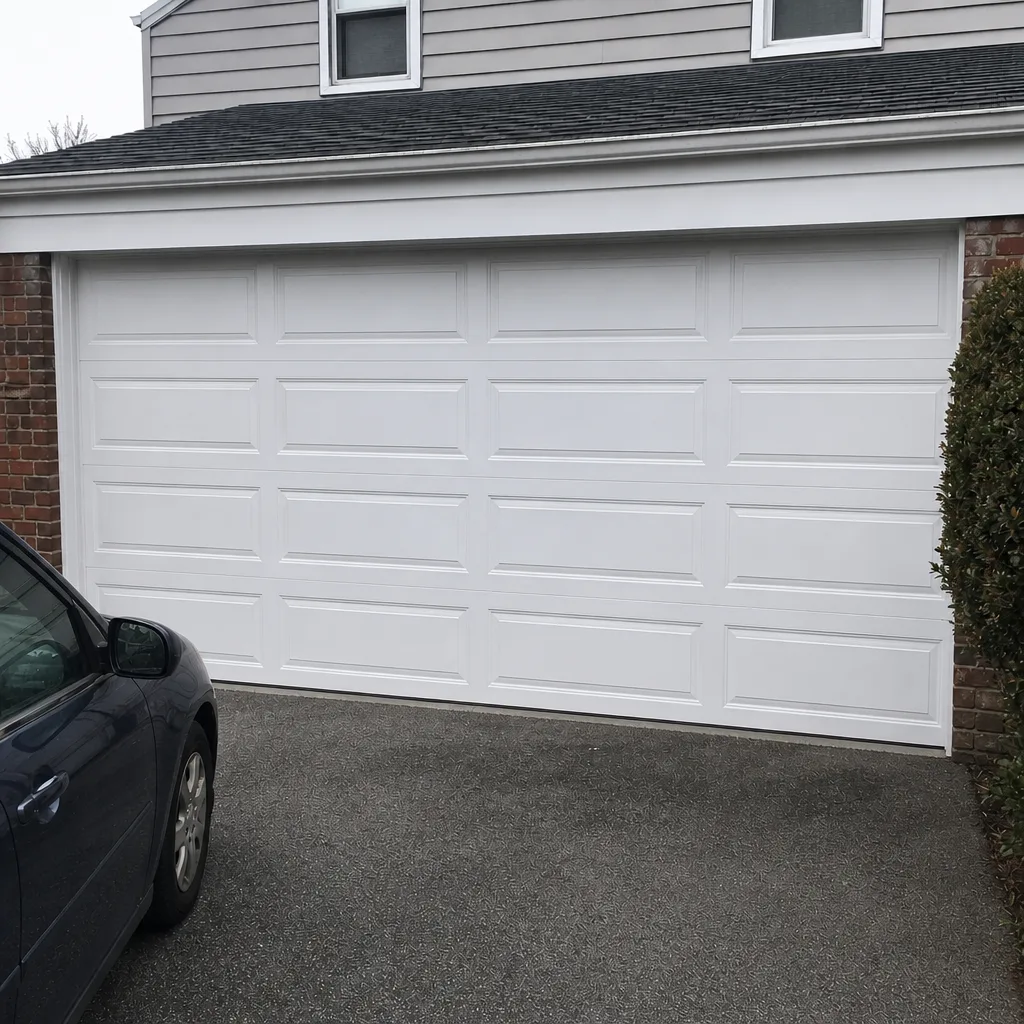 After
 Before
 After
 Before
 After
When to Call a Professional
Call a professional when the balance test shows any drift, when you see frayed or kinked cables, when a spring has broken or a door has become hard to lift, when the door reverses on its own, or when the opener hums without moving the door. These are the situations where DIY work creates real safety risk – torsion springs and cables store enormous energy, and opener electronics need the right diagnosis. For homeowners who want the job done correctly, Garage Door Repair Fort Lee offers free estimates in Fort Lee – call (877) 806-9927. We work on LiftMaster, Chamberlain, Genie, Clopay, Amarr, Wayne Dalton, Craftsman, and Raynor equipment, and one call covers repair, opener service, spring replacement, and installation. Our technicians have up to 11 years of experience with these systems.
Frequently Asked Questions
The earliest warning signs are a brief hesitation before the door moves, a motor that sounds strained while the door itself moves smoothly, visible cable fraying, an uneven bottom gap, and a door that sags during the manual balance test. These signs typically show up 30 to 60 days before a full failure, which gives you time to book a repair. Call (877) 806-9927 for a free estimate.
Disconnect the opener with the manual release and lift the door by hand. If it feels heavy or won’t stay open at halfway, the springs are worn. If it lifts easily by hand but hesitates when the opener is engaged, the opener needs service. That one test saves you from replacing the wrong component, and you can confirm it with a free estimate by calling (877) 806-9927.
It depends on the sign. A slight hesitation or a noisy roller usually allows use until the repair. A frayed cable, a broken spring, or a door that won’t balance should stay closed until a trained technician inspects it. Torsion springs and cables store high energy, and continued use risks injury or a door that falls. Call (877) 806-9927 to arrange a same-day inspection.
Cold weather usually causes a sensor alignment or sensitivity issue, not a failure. Temperature shifts move the sensor brackets, sunlight angles change, and the door frame moves slightly. Check that both sensor lights are solid and clear the area first. If they’re solid and it still reverses, the sensor or wiring needs service – call (877) 806-9927 for a free estimate.
Run it twice a year, and again any time you notice hesitation, noise, or a door that closes unevenly. Fort Lee’s freeze-thaw cycles stress springs and tracks, so a spring-and-track check each spring and fall catches wear before it becomes a failure. If the test shows drift, that’s the signal to book a repair, and we quote it for free.
Yes. Emergency garage door service is a core offering, not an add-on. If a spring has snapped or a door is stuck and can’t be closed, call (877) 806-9927 for same-day help. We’ll quote the repair and you approve it before any work starts.
The Bottom Line
The warning signs that matter most are the quiet ones: the half-second pause, the strained motor, the fuzzy cable, the uneven seal, the door that sags during the balance test. These give you a repair window, and using it keeps a small fix from becoming an emergency. Spring wear and opener wear are different problems, an uneven gap has two possible causes, and a winter reverse is usually alignment, not failure. If any of these appear, our Garage Door Repair Fort Lee team is one call away with free estimates. Call (877) 806-9927, and we’ll have you back up and running.
Written by the team at Garage Door Repair Fort Lee.